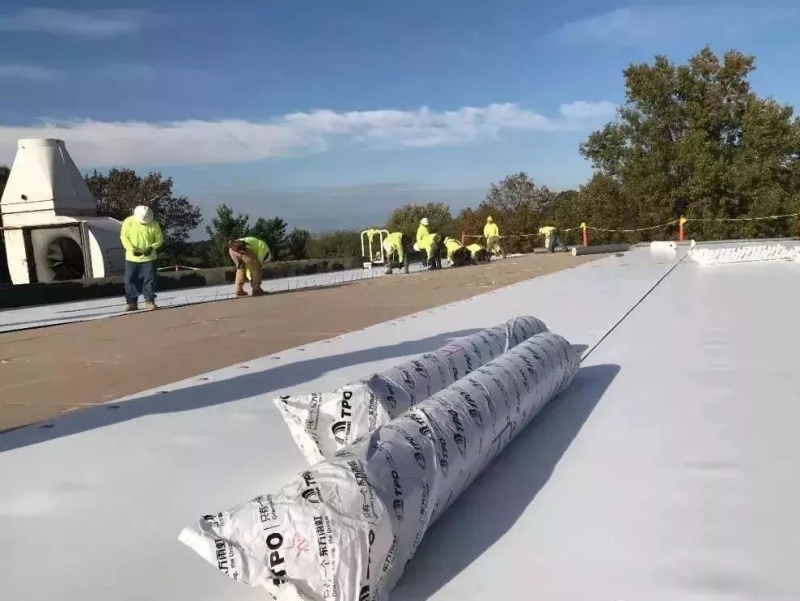
What are the main differences between TPO and PVC membranes?
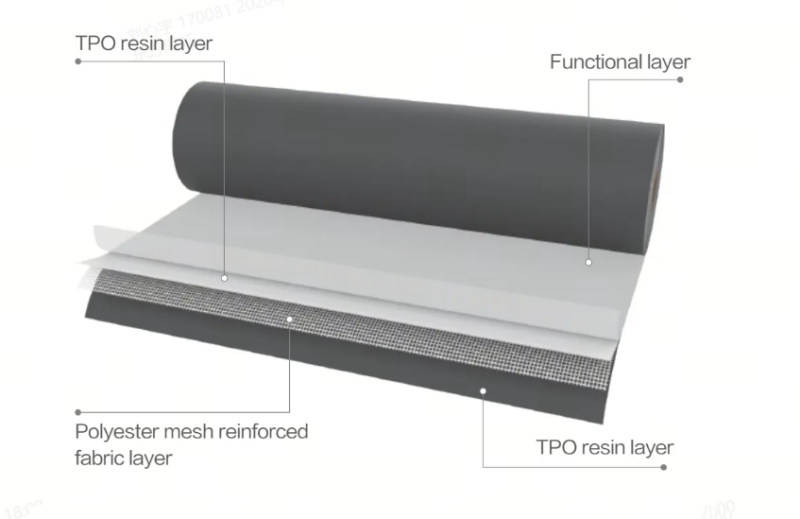
TPO (Thermoplastic Polyolefin) is a polyolefin-based material without plasticizers, while PVC (Polyvinyl Chloride) contains plasticizers to enhance flexibility.
This fundamental difference affects long-term performance, particularly in terms of aging, dimensional stability, and environmental profile.
Which standard governs TPO and PVC membranes?
• TPO: ASTM D6878
• PVC: ASTM D4434
• Europe: EN 13956
These standards define requirements for mechanical strength, weather resistance, and seam performance.
Why is plasticizer migration a concern in PVC membranes?
Over time, plasticizers in PVC may migrate or evaporate, leading to:
• material hardening
• shrinkage
• reduced flexibility
This can affect long-term durability, especially in exposed environments.
Does TPO completely eliminate aging issues?
No material is immune to aging.
Early-generation TPO membranes experienced oxidation issues, but modern TPO (third-generation formulations) have significantly improved UV and thermal stability.
Which membrane has better chemical resistance?
PVC generally offers better resistance to oils, grease, and chemicals, making it suitable for:
• restaurants
• industrial facilities
• chemical exposure environments
Which membrane performs better in terms of tear and puncture resistance?
TPO membranes typically provide better tear and puncture resistance, which is advantageous for:
• large industrial roofs
• high wind uplift areas
How do TPO and PVC compare in fire performance?
PVC has inherent flame-retardant properties due to chlorine content.
However, both systems can achieve high fire ratings (e.g., UL Class A) when installed as part of certified assemblies.
Are both membranes heat-weldable?
Yes.
Both TPO and PVC are thermoplastic materials and can be hot-air welded, creating seams that are often stronger than the membrane itself.
Which membrane has better solar reflectance (SRI)?
TPO membranes typically have higher initial solar reflectance, often exceeding 0.80.
Both materials can meet cool roof standards such as ENERGY STAR and CRRC.
Which system is more environmentally friendly?
TPO is generally considered more environmentally friendly because it:
• does not contain chlorine
• does not use plasticizers
• is more easily recyclable
Which membrane is more cost-effective?
TPO systems are typically more cost-competitive, especially for large-scale industrial projects.
Why is TPO gaining market share globally?
Key reasons include:
• improved formulation stability
• strong cool roof performance
• competitive cost
• sustainability advantages
Is PVC still a reliable solution?
Yes.
PVC has over 60 years of proven performance, especially in:
• chemically aggressive environments
• fire-sensitive applications
Which membrane is better for large industrial roofs?
TPO is often preferred due to:
• better mechanical strength
• lighter weight
• cost efficiency
Which membrane is recommended for restaurants or chemical plants?
PVC is typically recommended due to its superior resistance to grease and chemicals.
Do both systems require similar installation methods?
Yes, both systems support:
• mechanically attached
• fully adhered
• ballasted systems
However, detailing and system design remain critical.
Can membrane performance be judged only by material type?
No.
Waterproofing is a system, not just a material. Performance depends on:
• detailing
• workmanship
• substrate condition
• maintenance
How should engineers choose between TPO and PVC?
Selection should be based on:
• building function
• environmental exposure
• fire requirements
• budget
• sustainability goals
✅ Key Takeaway
• Choose TPO for: large-scale, cost-sensitive, energy-efficient roofing
• Choose PVC for: chemical exposure, fire performance, specialized environments
0 Comments