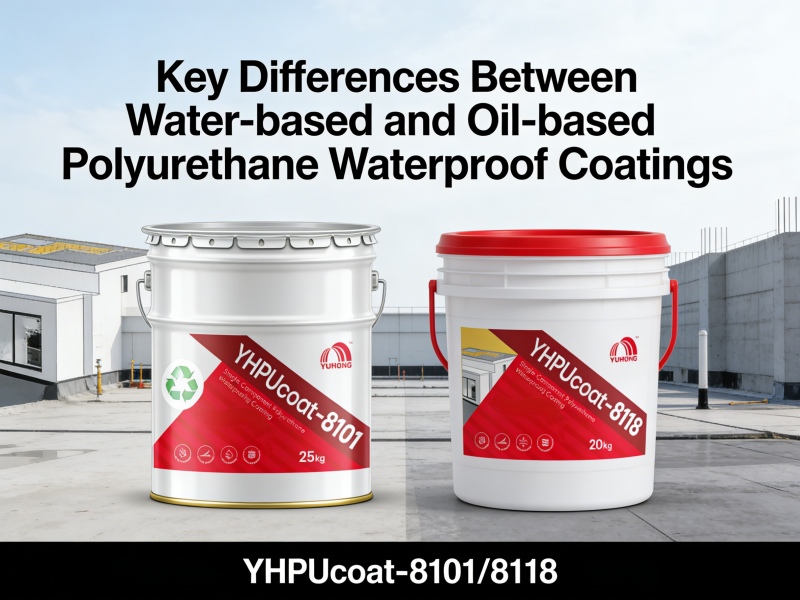
Differences Between Water-Based and Oil-Based Polyurethane
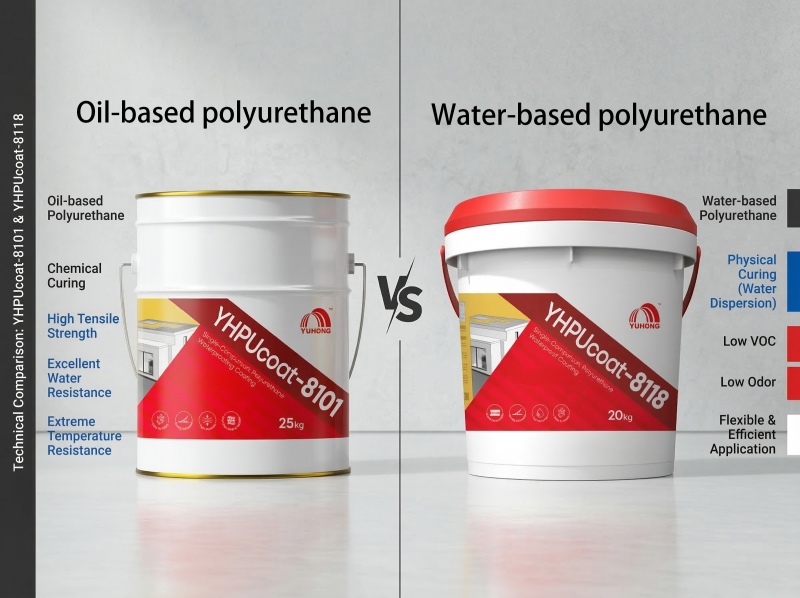
Oil-based polyurethane: A reactive coating that forms a dense, highly elastic film through chemical curing. It features high tensile strength and excellent water resistance, suitable for extreme temperature differences and high hydrostatic pressure environments. Representative product: YHPUcoat-8101.
Water-based polyurethane: A physically cured film-forming coating using water as the dispersion medium. It has low VOC, low odor, flexible and efficient application. The cured film offers good elasticity and breathability, ideal for indoor areas and irregular structural parts. Representative product: YHPUcoat-8118.
Is it correct that water-based polyurethane is more environmentally friendly than oil-based polyurethane?
This view is not comprehensive.
Traditionally, oil-based polyurethane contains large amounts of organic solvents and is harmful to the environment, while water-based polyurethane uses water as the dispersion medium and has less environmental impact.
However, with technological advancements, modern oil-based polyurethane can also achieve excellent environmental performance. For example, YHPUcoat-8130 has a VOC level comparable to the water-based YHPUcoat-8108, nearly zero.
Other OYH polyurethane products also use non-toxic, harmless organic carriers with strictly controlled content, fully meeting the environmental requirements for building materials.
Is it correct that oil-based polyurethane has better exterior exposure performance than water-based polyurethane?
This view is incorrect.
The exterior usability of polyurethane coatings does not depend on their physical form or dispersion medium, but on the UV stability of the raw materials used in polyurethane synthesis.
• Polyurethanes synthesized from aromatic raw materials have poor weather resistance, prone to aging, yellowing and chalking, and are not suitable for exterior exposure.
• Polyurethanes synthesized from aliphatic raw materials have excellent UV resistance and weatherability, and are suitable for long-term exterior exposure.
Both oil-based and water-based polyurethane can be formulated into aromatic or aliphatic structures by selecting corresponding raw materials.
Examples:
• YHPUcoat-8101: oil-based aromatic polyurethane, not for exterior use.
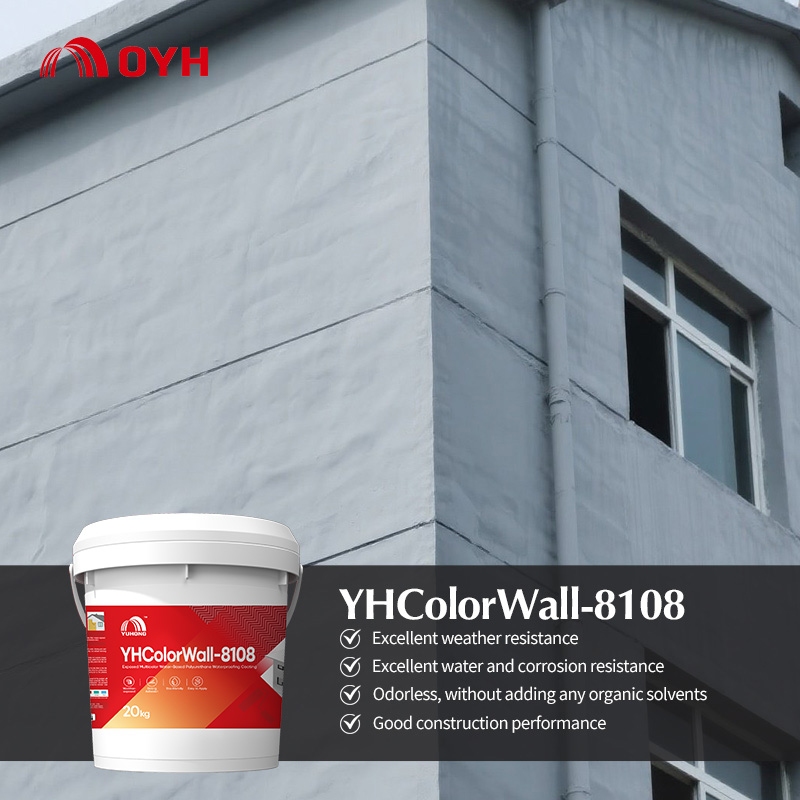
• YHColorwall-8108: water-based aliphatic polyurethane, suitable for exterior use.
What are the differences in construction efficiency between water-based and oil-based polyurethane?
Under normal conditions:
• Water-based polyurethane: surface dry in approx. 1–2 hours; recoat interval: 4–6 hours.
• Oil-based polyurethane: longer surface dry time (>3 hours); recoat interval: 12–24 hours.
Under extreme conditions:
• High humidity: water-based polyurethane becomes very difficult to dry; oil-based polyurethane risks foaming.
• High temperature: water-based polyurethane may crack due to excessively fast water loss; oil-based polyurethane will have a shorter drying time.
0 Comments