As cities become more densely built, access to natural space has become increasingly limited. At the same time, people are placing greater value on living quality, wellbeing, and closer interaction with nature. In this context, green roofs have emerged as an effective way to reintroduce vegetation into urban environments by transforming unused roof areas into functional green spaces.
Beyond social needs, green roofs also provide clear environmental benefits. Compared with conventional hard roofing surfaces, they help reduce urban heat island effects, improve microclimates, and contribute to better stormwater management and overall urban sustainability.
However, a green roof is not simply a decorative layer placed on top of a building. It is a living, functional system that continuously interacts with water, soil, and plant roots. This makes its waterproofing design significantly more complex than conventional roofing systems.
What Is a Green Roof System?
A green roof system refers to a roofing assembly where vegetation is installed above a waterproofing system, replacing traditional exposed roof finishes.
It is not simply a landscaping layer placed on a roof. Instead, it is a fully engineered system designed to support plant growth while protecting the building structure underneath.
Because of this dual function—supporting life while protecting the building—the waterproofing layer plays a critical role in ensuring long-term system performance.
Common Causes of Green Roof Waterproofing Failure
In green roof systems, the waterproofing layer operates under long-term biological, chemical, and mechanical exposure. Several key challenges must be properly addressed to ensure long-term performance.
Root penetration risk
Plant roots naturally grow toward moisture and nutrients, creating continuous pressure on the waterproofing layer. Without sufficient resistance, they may eventually penetrate the membrane and compromise the system.
Long-term moisture exposure
Unlike conventional roofs, green roof waterproofing remains in constant contact with soil and water. This requires long-term stability under permanently wet and buried conditions.
Chemical exposure from soil environment
Fertilizers, organic acids, and biological activity in the soil can create a chemically aggressive environment, gradually affecting material durability over time.
Requirement for environmental compatibility
Since the waterproofing system is in direct contact with vegetation, it must remain stable without releasing harmful substances that could impact plant growth or soil quality.
Overall, green roof waterproofing systems must simultaneously resist mechanical root pressure, long-term moisture exposure, chemical attack, and environmental interaction, making material selection and system design critical.
Green Roof System Structure and Root-resistant Waterproofing Solution
A green roof system is composed of multiple functional layers, each designed to perform a specific role in ensuring waterproofing reliability, structural safety, drainage performance, and healthy vegetation growth.
To support these requirements, OYH provides a full range of compatible system solutions covering key components such as vapor control, insulation, waterproofing, and drainage.
The typical green roof build-up is as follows:
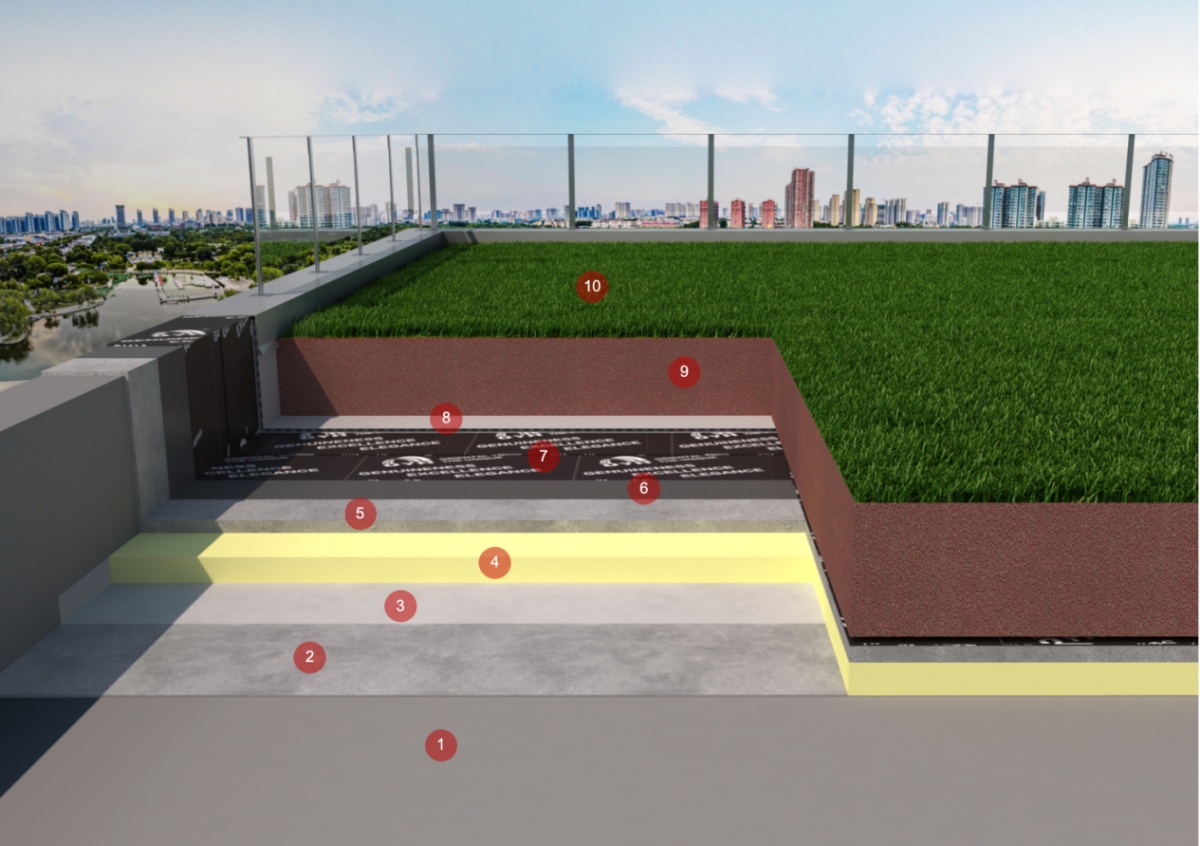
Roof Deck
The structural base of the roof system, designed to support all subsequent layers and loads.
Sloping Screed
Provides a smooth and properly sloped surface to ensure effective drainage and prevent water ponding.
Vapor Barrier
Installed to control vapor diffusion and prevent internal moisture from affecting upper roof layers.
OYH solutions:
YHStick-9000 Self-adhesive Bituminous Vapor Barrier Membrane
YHPEfilm-0600 Vapor Impermeable Film
Thermal Insulation Layer
Provides long-term thermal performance and compressive strength under service loads.
OYH solution:
OYH XPS Insulation Board
Protective Screed
Protects the insulation layer from mechanical damage and provides a stable base for subsequent waterproofing works.
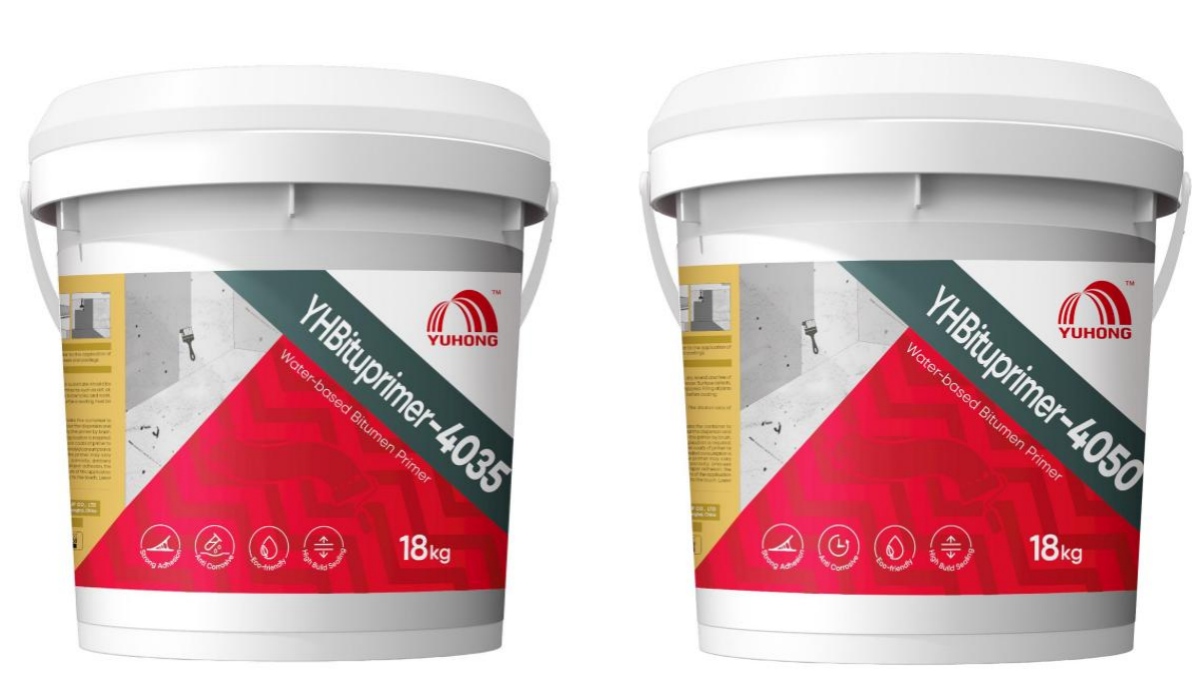
Bituminous Primer
Improves adhesion between the substrate and waterproofing membrane, ensuring a reliable bonding interface.
OYH solutions:
YHBituprimer-4035 / YHBituprimer-4050 Water-based Bituminous Primer
Anti-root Waterproofing Membrane
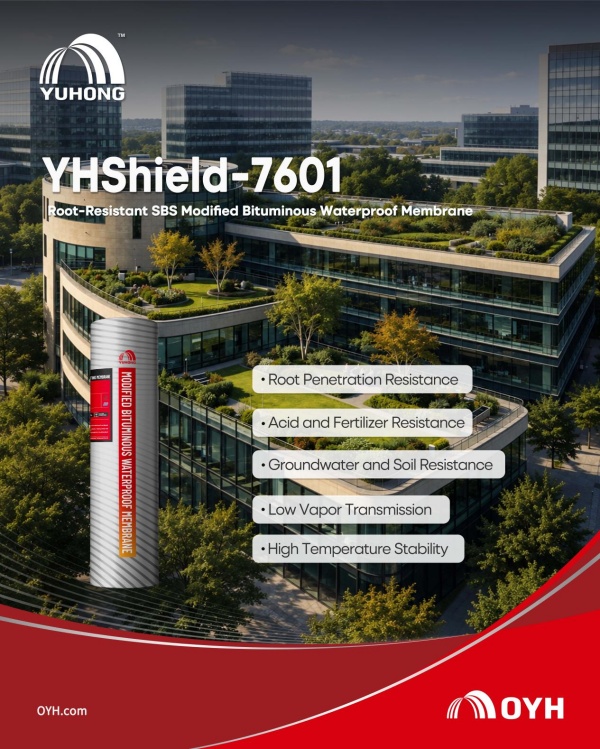
The key waterproofing layer designed to resist both water penetration and root intrusion.
OYH solution:
YHShield-7601 Root-resistant SBS Modified Bituminous Waterproofing Membrane
This membrane is reinforced with a high-performance polyester carrier, providing excellent tensile strength, puncture resistance, and tear resistance, ensuring reliable performance under construction and long-term service conditions.
In addition, YHShield-7601 contains a chemical root-resistant agent that inhibits vertical root growth and redirects it horizontally, effectively preventing root penetration and maintaining waterproofing integrity.
It also offers strong resistance to humid acids and fertilizers, making it suitable for long-term soil-contact environments with high biological and chemical activity.
Drainage Layer with Geotextile
Ensures efficient water drainage while preventing soil particle clogging and protecting the waterproofing system.
OYH solution:
YHDrainPro Composite Drainage Board
Soil Layer
Provides a growing media for vegetation and supports plant development.
Plants
The final vegetation layer, delivering ecological, thermal, and aesthetic benefits to the building.
Conclusion
A successful green roof system depends on the seamless integration of every layer, from vapor control and insulation to waterproofing and drainage. Among them, the waterproofing membrane plays a critical role in ensuring the long-term durability of the entire system.
With a complete range of compatible green roof solutions, including the YHShield-7601 root-resistant SBS modified bituminous waterproofing membrane, OYH helps deliver reliable waterproofing performance while supporting healthy vegetation and sustainable building development.
0 Comments