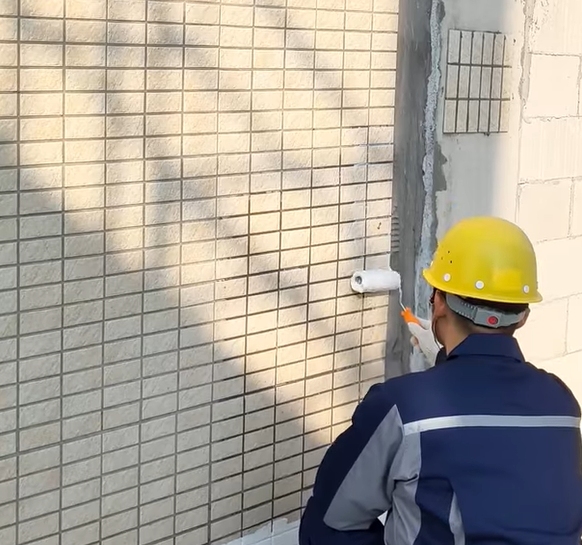
On construction sites across Southeast Asia, one question surfaces during every tiling specification meeting: “Do we use tile adhesive or traditional mortar?” The answer shapes installation timelines, material logistics, and whether tiles stay bonded through years of tropical heat, monsoon humidity, and structural movement.
The Fundamental Difference Between Tile Adhesive and Mortar
At first glance, both materials look the same — cement-based powders mixed with water and spread with a trowel. But the similarity ends at the chemical level. Traditional mortar is simply cement, sand, and water. It bonds by penetrating surface pores and forming a mechanical key. This works adequately for high-porosity clay bricks, but it cannot grip modern porcelain tiles, where water absorption sits below 0.5% and there are practically no open pores for mechanical anchoring.
Tile adhesive adds polymer modifiers — redispersible powders and cellulose ethers — that create a dual-phase structure: a polymer film interpenetrating with the cement hydrate matrix. This delivers two capabilities that mortar cannot. First, chemical adhesion to low-porosity surfaces, removing the reliance on mechanical keying. Second, elastic deformation capacity — typically 2.5 mm or more under the S1 classification — that allows the adhesive layer to absorb substrate micro-movement rather than cracking with it.
These differences cascade into every practical dimension. Tile adhesive is applied at 3 to 6 mm thickness versus 15 to 25 mm for mortar, reducing material weight per square meter by over 70%. Its open time runs 20 to 30 minutes or longer, compared to roughly 15 minutes for site-mixed mortar — a critical advantage in Southeast Asian heat where mortar skins over rapidly. Curing before grouting takes 24 to 48 hours, not the seven-plus days mortar demands. And its bond strength is tested and classified under EN 12004 and JC/T 547-2017 against defined conditioning regimes, while traditional mortar carries no tile-specific performance standard at all.
Tile Adhesive vs Mortar: Which One Should You Choose?
The skill for B2B buyers is not knowing the chemistry — it is knowing which material to specify for which job.
For indoor dry areas — living rooms, bedrooms, offices — the decision depends on the tile. Standard ceramic tiles with over 3% water absorption can work with either material; traditional mortar wins on pure material cost, while C1 tile adhesive wins on speed and thinner floor build-up. But the moment the specification calls for porcelain or vitrified tiles with water absorption below 0.5%, mortar is no longer an option. The bond simply will not hold. Large-format porcelain at 1200 by 2400 mm and above demands C2TES1 classification — bond strength, deformability, anti-slip performance, and extended open time all become non-negotiable.
Wet areas are where mortar fails most predictably. Bathrooms, kitchens, and laundries expose the bond line to continuous moisture that traditional mortar absorbs over time, weakening adhesion and creating conditions for efflorescence and mould behind tiles. Shower walls and floors require C2 tile adhesive with a waterproofing membrane beneath — the adhesive bonds tiles but does not waterproof the substrate. For steam rooms and saunas, where thermal cycling adds daily expansion and contraction, C2S1 deformability is the minimum specification.
Outdoor exposure raises the bar further. Balcony floors in tropical climates experience daily temperature swings of 15 to 20 degrees Celsius, driving differential expansion between tile and concrete slab. A rigid mortar bed cracks under this stress; an S1-classified adhesive absorbs it. Building facades combine vertical load, wind pressure, and thermal cycling — traditional mortar on exterior walls is one of the most common failure patterns across Southeast Asia. Rooftop terraces face submerged conditions during monsoon season and require the adhesive to perform as one layer within a full waterproofing stack.
Commercial and industrial environments introduce impact, chemical exposure, and heavy loading. Shopping mall floors demand bond durability under repeated foot traffic. Commercial kitchens combine grease, hot water, cleaning chemicals, and heavy equipment. Hospital operating rooms add low-VOC indoor air quality requirements to hygienic surface continuity.
There are, however, applications where traditional mortar remains the correct choice. Brick and block masonry is mortar’s primary function — bedding and jointing structural units, not bonding tiles. Stone masonry with mechanical anchors uses mortar as supplementary fill rather than primary bond. Rendering and screeding serve as substrate preparation layers before tiling begins. And for very small-format, high-absorption ceramic tiles in dry interiors on a tight budget, mortar costs less per square meter while delivering acceptable performance.
A Complete Tile Installation System: From Substrate to Grout
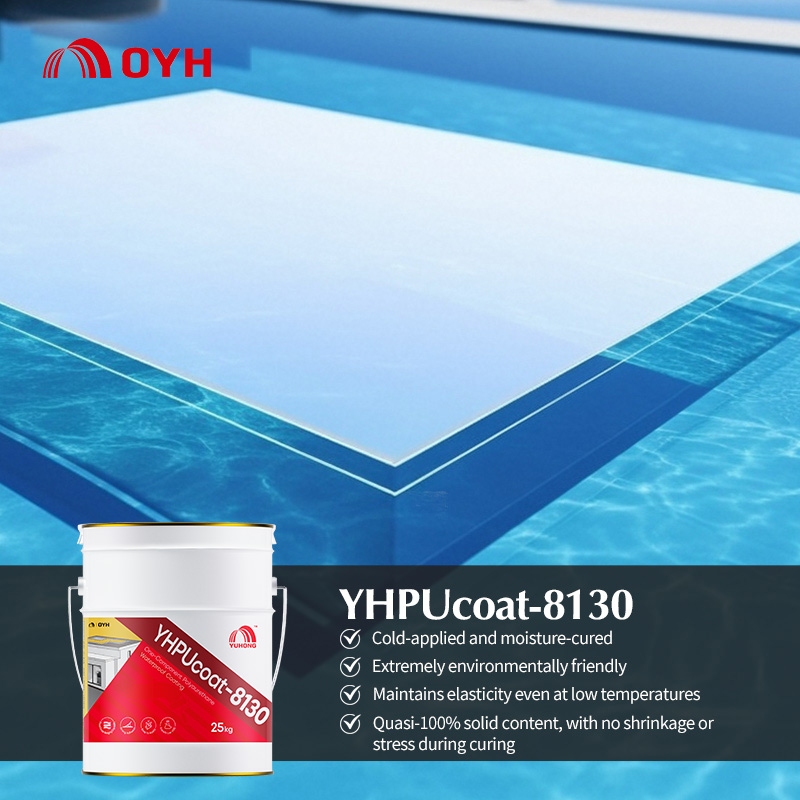
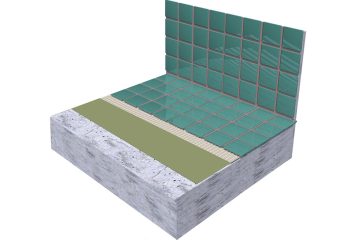
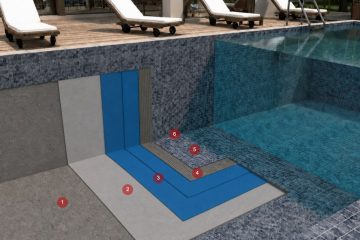
For B2B buyers sourcing in Southeast Asia, specifying tile adhesive within a complete system eliminates the compatibility variables that surface as expensive installation defects. A typical wet-area installation involves four layers. A primer such as VASA PMC-700 (product designation may vary by country or region) consolidates substrate dust and equalises porosity. A waterproofing membrane — OYH YHPUcoat-8130, a solvent-free polyurethane coating with over 99.5% solids content and EC1PLUS certification — creates a continuous waterproof layer beneath the tile bed. The tile adhesive itself, VASA TAS116 in C2TES1 classification, provides tested bond strength across all conditioning regimes with deformability for substrate movement. For sintered stone and ultra-large slabs, VASA TAS115 offers enhanced flexibility. The grout — VASA TF-M102, a wide-gap waterproof formulation — completes the system. When waterproofing and adhesive come from a single manufacturer’s system, interface adhesion is a tested parameter, not an assumption. Full-system shipments from the Johor Bahru factory reach major Southeast Asian ports in 7 to 10 days.
Tile adhesive is not a modern replacement for mortar — it is a fundamentally different bonding technology, engineered for predictable performance against defined standards. For B2B buyers, the question is not which costs less per bag, but which eliminates callbacks and latent defect liability over the warranty period.
Frequently Asked Questions
What is the main difference between tile adhesive and mortar?
Tile adhesive contains polymer modifiers that provide chemical adhesion and elastic deformability. Traditional mortar relies purely on cement-sand mechanical interlock. This means tile adhesive bonds to low-porosity surfaces like porcelain tiles, while mortar requires porous surfaces for mechanical anchoring.
Can tile adhesive be used on exterior walls?
Yes, provided the correct classification is specified. Exterior walls require C2S1 or higher — the S1 deformability absorbs thermal expansion differentials. Standard C1 or unclassified adhesive on exterior walls carries a high risk of debonding over time.
Which classification is needed for large-format porcelain tiles?
C2TES1. C2 provides ≥1.0 MPa bond strength across all conditioning regimes. S1 ensures ≥2.5 mm transverse deformation to absorb substrate movement. T provides anti-slip performance. E extends open time for the longer adjustment periods large-format installation requires.
Does tile adhesive replace the need for waterproofing in wet areas?
No. Tile adhesive bonds tiles — it is not a waterproofing layer. Wet areas require a continuous waterproofing membrane applied to the substrate before tile adhesive installation. The adhesive, membrane, and grout function as a system, with each layer addressing a different requirement.
When should traditional mortar still be used?
For brick and block masonry, stone masonry with mechanical anchors, rendering and screeding, and very small-format high-absorption ceramic tiles in dry interiors on a tight budget. Mortar is not designed as a tile bonding agent and should not be specified as one for porcelain, large-format, or exterior tile applications.
Regional Product Information
Product names and model numbers mentioned in this article are provided for reference only. Equivalent products may be marketed under different model names or codes depending on the country or region. For product availability and the appropriate local product designation, please contact your local OYH or VASA representative.
0 Comments