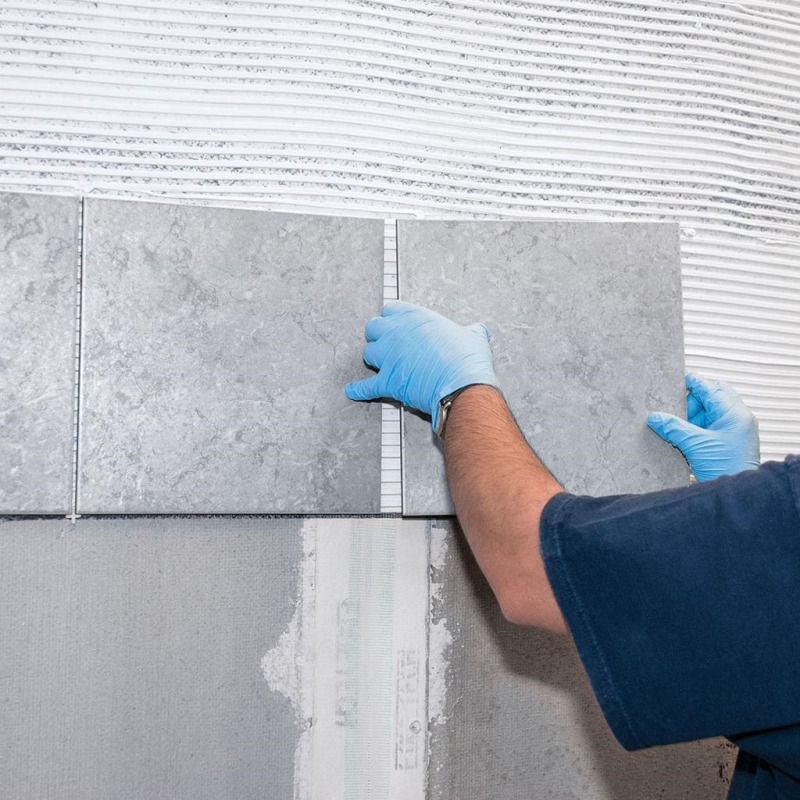
Wall tiling is where adhesive selection matters most. Unlike floor tiles, which are pressed into position by gravity, wall tiles are constantly pulled away from their substrate — every square meter of porcelain on a vertical surface represents dead load fighting against the bond line. For contractors and project managers specifying materials across Southeast Asia, where humidity adds another variable to the equation, understanding what makes a wall-specific adhesive different from a general-purpose one is the difference between a 10-year installation and a callback within the first wet season.
Why Wall Tiling Demands Different Adhesive Properties
The physics of wall tiling create three requirements that floor applications do not share. The first is anti-slip performance. When a large-format tile is pressed onto a vertical adhesive bed, gravity begins pulling it downward immediately — before the adhesive has cured. Without sufficient slip resistance, tiles drift out of alignment during the initial set, and correcting them after the adhesive skins over is difficult and risks bond disruption. The T classification under EN 12004, which guarantees slip of 0.5 mm or less, is designed specifically for this wall-tiling challenge.
The second is substrate adaptability. Walls present a wider variety of substrates than floors. Concrete, aerated block, gypsum board, cement render, and existing glazed tiles each demand different surface preparation and primer selection before adhesive application. A product that bonds well to concrete may fail on gypsum if the substrate is not primed correctly.
The third is format compatibility. The trend toward large-format porcelain panels — 1200 by 2400 mm and above — has changed what wall adhesives must handle. A single 1200-by-2400 porcelain panel weighs roughly 40 to 50 kilograms, and its low water absorption means mechanical keying is unavailable. The adhesive must deliver high tensile bond strength, deformation capacity for substrate movement, and sufficient open time for the installer to position and adjust a panel of that size before the adhesive skins over.
Matching Classification to the Wall Application
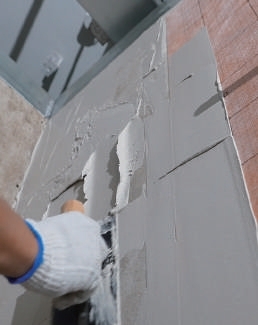
Not every wall needs C2TES1. The specification should follow the tile, not the intuition that “stronger is always better.”
For small-format ceramic tiles — bathroom wall ceramics with water absorption above 3%, installed on a stable, primed concrete or render substrate in a dry interior — C1 classification provides adequate bond strength at the lowest material cost. The tiles are light enough that anti-slip and deformation capacity are not performance-critical.
The specification steps up when porcelain enters the equation. Porcelain wall tiles with water absorption below 0.5% require C2 classification as a minimum — the polymer modification is essential for chemical adhesion to the near-zero-porosity tile body. This covers most standard porcelain wall applications in dry interiors.
When tiles grow beyond 600 by 600 mm, or when the substrate is subject to movement — new concrete still undergoing shrinkage, lightweight block walls, or walls exposed to diurnal temperature swings — C2S1 provides the additional deformation capacity. The S1 classification guarantees at least 2.5 mm of transverse deformation, which decouples the tile from substrate micro-cracks that would propagate through a rigid bond line.
For large-format wall panels — 1200 by 2400 mm and above — C2TES1 is the correct specification. The T addresses the slip that heavy panels experience on vertical surfaces during curing. The E extends the open time, giving installers a practical working window in Southeast Asia’s ambient heat. And the S1 ensures the bond line flexes with structural movement rather than fracturing under it. For sintered stone and ultra-large slabs exceeding 1600 by 3200 mm, a specialty formulation such as VASA TAS115 provides the enhanced flexibility that standard C2TES1 products are not designed to deliver.
The Wall Tiling System: Primer, Adhesive, Grout
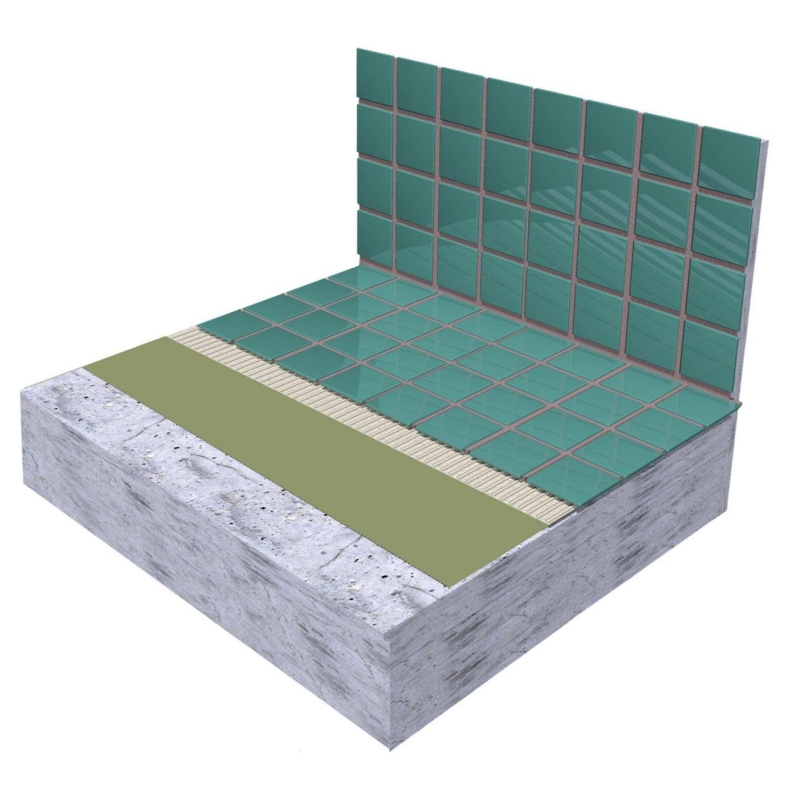
Wall tile adhesive does not work in isolation. The substrate surface determines bond quality as much as the adhesive itself, which is why primer selection is not optional for wall applications.
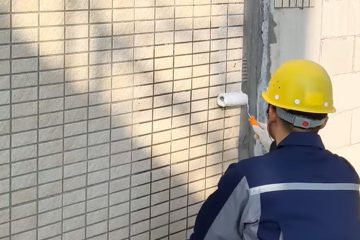
Porous substrates such as aerated block or cement render absorb water from the adhesive, starving the cement hydration reaction and reducing final bond strength. A primer such as VASA PMC-700 seals the surface without creating a film barrier, equalising porosity so the adhesive cures uniformly. Non-porous substrates such as existing glazed tiles present the opposite problem — the surface offers no mechanical key — and the same primer creates a bondable intermediate layer.
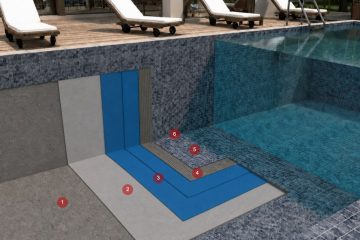
For wet-area walls — bathrooms, showers, and commercial kitchens — the adhesive sits above a waterproofing membrane, not directly on the substrate. OYH YHPUcoat-8130, a solvent-free polyurethane coating with over 99.5% solids content and EC1PLUS certification for ultra-low emissions, creates a continuous waterproof layer beneath the tile bed. The tile adhesive then bonds to the cured membrane surface rather than to raw concrete, and the grout — VASA TF-M102, a wide-gap waterproof formulation — seals the joints.
When the waterproofing, adhesive, and grout are specified from a single manufacturer’s system, each interface is a tested parameter. Full-system deliveries from the Johor Bahru factory reach Southeast Asian ports in 7 to 10 days.
The Wall Specification Checklist
For B2B buyers specifying wall tile adhesive across multiple project types, three decisions drive the specification. First, what is the tile format and water absorption rate — this determines the minimum classification. Second, what is the substrate — this determines the primer requirement. Third, is the wall in a dry or wet area — this determines whether a waterproofing membrane is required beneath the adhesive.
Getting these three variables right at the specification stage costs nothing. Getting them wrong is paid for in hollow tiles, cracked grout lines, and full-wall replacements that could have been avoided with one correct product decision.
0 Comments