Modern tiles for residential and commercial decoration cover a full specification system including small mosaic tiles, regular tiles, large tiles and ultra-large slabs, and there are significant differences in performance requirements for bonding materials due to varying self-weight, water absorption and application environments; mismatched material selection can easily lead to quality issues such as hollowing, falling off, slipping and cracking. Currently, the common cement-based bonding materials on the market are divided into seven grades: C0, C1, C1T, C2, C2T, C2S1 and C2TES1, which can cover tiles of all specifications and all construction scenarios. Among them, grades from C1 to C2TES1 comply with the national standard JC/T 547-2017 and EN 12004 for tile adhesives, and belong to professional bonding materials; C0 complies with the GB/T 25181-2019 standard for ready-mixed mortar and is only a basic bonding mortar.
The strength grades are divided into three tiers: C0 basic mortar, C1 standard professional grade, and C2 reinforced high-strength grade, with bonding strength, load-bearing capacity and durability increasing step by step. The functional suffixes serve as supplementary special properties: T stands for anti-slip, E stands for extended open time, and S1 stands for Class 1 flexible deformation resistance. Through different combinations, seven levels of gradient products are formed, which can precisely adapt to various scenarios such as simple tiling, conventional home decoration, floor heating deformation, large-format wall panels, and complex outdoor working conditions.
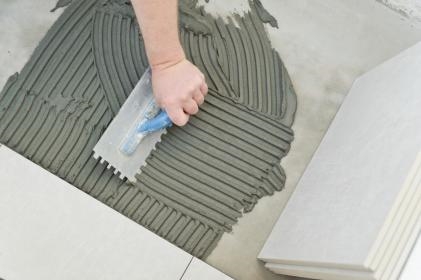
What are the Core Properties of the Seven Grades of Bonding Materials? A Concise and Detailed Explanation
The seven grades of bonding materials fall into two main categories: base mortar and professional tile adhesive, which have essential differences in performance, testing standards and service life, and shall not be mixed arbitrarily. C0 is not subject to professional performance testing under service conditions and is only suitable for simple construction with ultra-low standards; all products of C1 and above have passed four strict national standard tests including normal temperature, water immersion, thermal aging and freeze-thaw, featuring stable performance and durable reliability, which can meet the long-term use requirements of household and commercial decoration, with performance upgraded step by step at each level to realize full coverage and adaptation of all specifications of tiles.
1. C0 Ordinary Bonding Mortar
C0 is a non-professional premixed bonding mortar, which is not subject to mandatory national standard strength thresholds or durability condition testing. It has a low polymer content and poor water resistance, aging resistance and deformation resistance, and is prone to hollowing and delamination after long-term use. It is only suitable for traditional small ceramic tiles of 300×300mm and below with ultra-high water absorption, and can only be used on indoor dry floors with stable structure and no temperature difference or settlement, which is applicable to temporary, low-cost simple decoration. Due to its prominent performance shortcomings, it is strictly prohibited to be used for large-size tiles, low-water-absorption vitrified tiles, walls, humid areas of kitchens and bathrooms, floor heating and outdoor scenarios, and is not recommended for formal long-term decoration.
2. C1 Standard Tile Adhesive
C1 is an entry-level professional tile adhesive compliant with JC/T 547-2017 and EN 12004, featuring a working-condition bonding strength of ≥0.5MPa. It delivers significant improvements over C0 mortar in compactness, adhesion and water resistance, with stronger laying stability. As a rigid bonding system, this model has no anti-slip property, flexible deformation performance or long open time, and its construction adaptability is relatively basic. It is mainly suitable for ceramic tiles of 600×600mm and below with high water absorption, and applicable to indoor dry, structurally stable ground substrates. As a basic professional alternative to traditional cement mortar, it is not suitable for vitrified tiles, wall laying, floor heating systems and complex outdoor working conditions.
3. C1T Standard Anti-slip Tile Adhesive
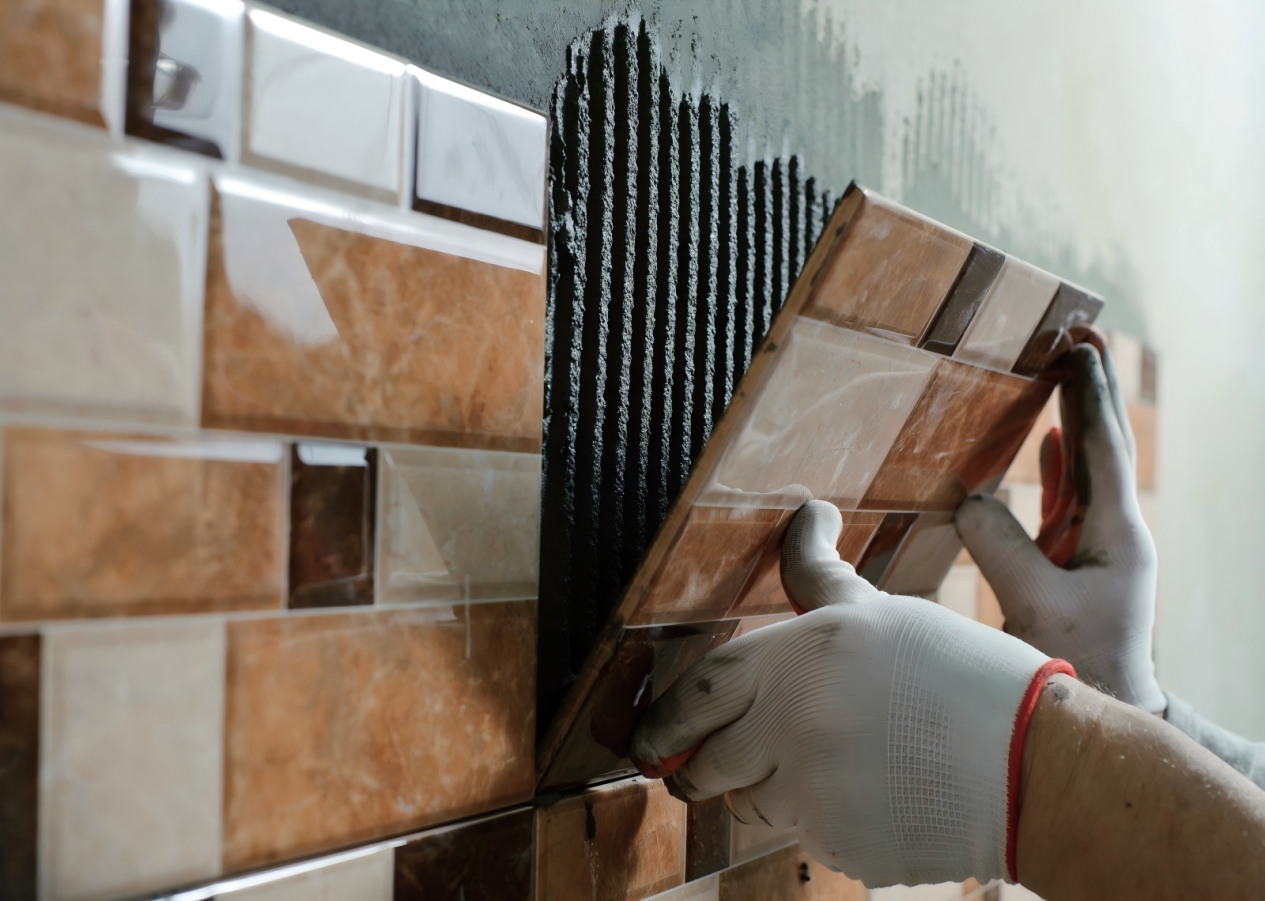
Based on the basic strength of C1, C1T features the national standard T-level anti-slip performance, which is specially designed to solve the problems of falling and displacement of small wall tiles after installation. It features fast shaping speed for vertical tiling and higher flatness. The product retains the basic rigid characteristics of C1 as a whole, without flexible deformation and extended open time, so it cannot adapt to complex working conditions such as temperature difference, freeze-thaw and base deformation. It is exclusively suitable for kitchen and bathroom ceramic tiles and clay wall tiles of 600×600mm and below with high water absorption, and is only used for dry, stable and solid walls. It is a cost-effective professional choice for tiling small tiles on the walls of small-sized houses, and is not applicable to large tiles, low water absorption tiles, floor heating and outdoor scenarios.
4. C2 Enhanced Tile Adhesive
C2 is a high-strength professional tile adhesive with a working-condition bonding strength ≥1.0MPa and a bearing capacity twice that of C1. It can stably bond low-water-absorption, high-density vitrified tiles and full-body tiles, thoroughly solving the problem of insufficient bonding strength of ordinary adhesives. The water resistance, aging resistance and freeze-thaw resistance of the adhesive layer are significantly improved, leading to stronger paving durability. This product features a rigid structure, without anti-slip property, flexible deformation performance or long open time; it is prone to slipping after being applied to the wall and cannot offset the deformation stress from floor heating. It is mainly compatible with medium and large-sized floor tiles of 600×600mm–600×1200mm, suitable for stable floors in indoor dry areas and regular kitchens and bathrooms, but not applicable to walls, underfloor heating, deformed base layers and outdoor working conditions.
5. C2T Enhanced Anti-slip Tile Adhesive
C2T integrates the high bonding strength of C2 and the anti-slip performance of national standard T grade. It is a special adhesive for medium and large-sized wall tiles, which can effectively resist the self-weight of tiles, prevent wall tiles from skewing, falling and shifting, and greatly improve the wall tiling accuracy and finished product stability. It features stronger bonding reliability for low water absorption tiles, and meets the mainstream wall tiling demands of modern home decoration. It is mainly suitable for vitrified tiles, soft-polished tiles and marble wall tiles of 600×1200mm and below, and applicable to stable indoor walls. Due to the lack of flexibility and long open time, it cannot be applied to scenarios with floor heating, deformable substrates, or outdoor exposure and rain.
6. C2S1 Grade 1 Flexible Tile Adhesive
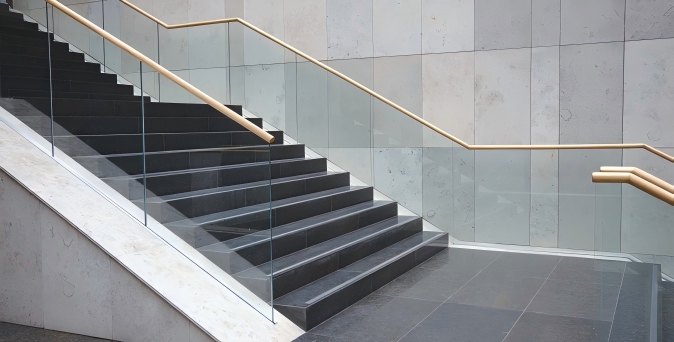
Built on the high strength of C2, C2S1 meets the national standard S1 grade flexible specification, with a transverse deformation of ≥2.5mm. It can effectively absorb structural stress generated by thermal expansion and contraction of underfloor heating, micro-settlement of the base layer, and splicing of old and new walls, fundamentally preventing tile cracking, delamination and warping, making it an essential material for scenarios sensitive to deformation and temperature difference. It is compatible with large-format floor tiles ranging from 800×800mm to 750×1500mm, and is widely used for indoor underfloor heating floors, deformed base layers of renovated houses, and areas with large temperature fluctuations. Without special anti-slip performance and long open-time performance, it is not suitable for high-precision large-format tile wall installation and outdoor construction.
7. C2TES1 All-Purpose Large-Format Tile Adhesive
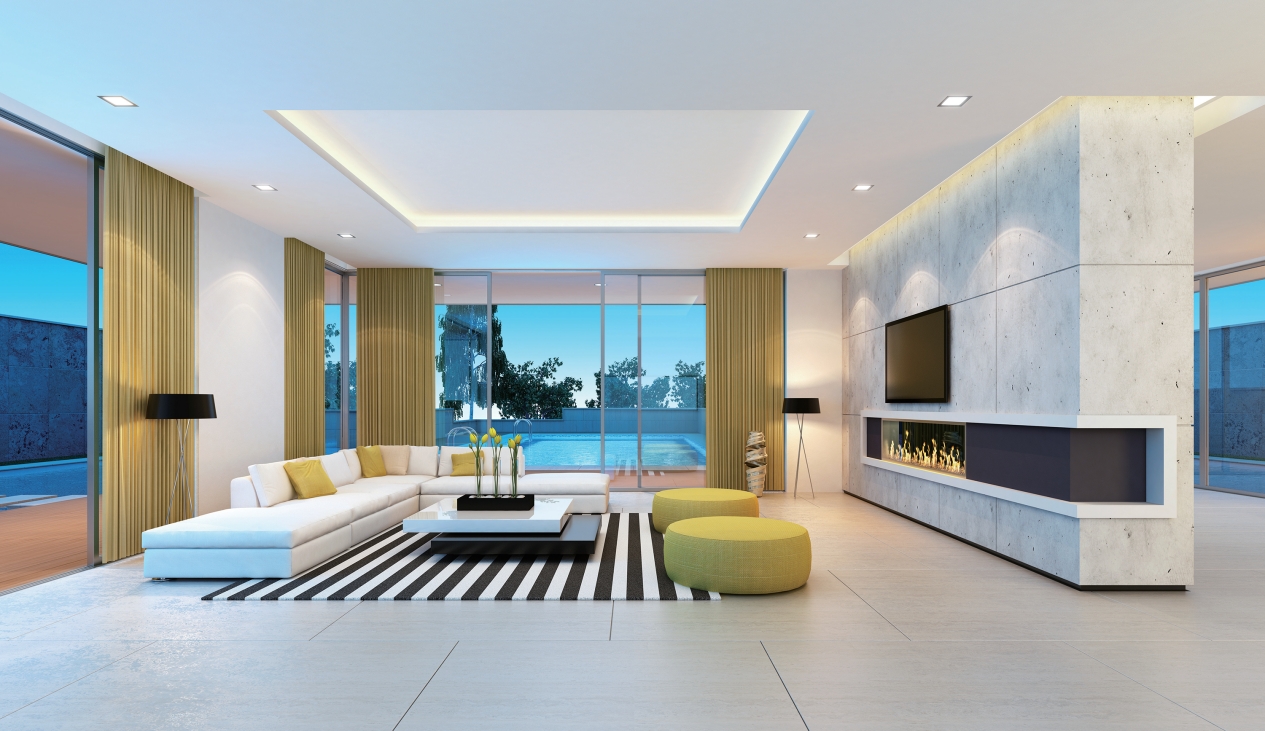
C2TES1 is a top-tier all-round tile adhesive compliant with Chinese national standards, integrating four core properties: C2 high strength, T anti-slip, E extended open time, and S1 high flexibility, with no application limitations. Its high load-bearing capacity can support the weight of extra-large slabs and heavy stone; the anti-slip property solves the problem of large slabs slipping down when installed on walls; the extended open time allows for precise alignment and fine adjustment; the high flexibility adapts to temperature differences and structural deformation, while its weather resistance, frost resistance and moisture resistance are all at the maximum level. It is compatible with all slabs of 1200×2400mm and above as well as thick stone, and fully adapts to complex working conditions including indoor and outdoor walls and floors, underfloor heating, open-air balconies, humid kitchens and bathrooms, and high-altitude installation, making it the only optimal choice for high-end extra-large slab installation.
A General Comparison Table for Parameters of Full-Specification Tile Adhesives
| Binder Grade | Executive Standard | Bond strength | Flexible | anti-slip | open time | Adaptation Specifications | Core Application Scenarios |
| C0 bonding mortar | GB/T 25181-2019 | No mandatory threshold | None | Normal | Conventional | ≤300×300mm | For simple temporary renovations, laying small ceramic tiles on dry floors, using non-professional tile adhesive, and scenarios with no durability requirements |
| C1 Normal Type | JC/T 547-2017 and EN 12004 | ≥0.5MPa | None | Normal | Conventional | ≤600×600mm | Suitable for laying small-sized tiles for formal home decoration, high water absorption ceramic tiles, on indoor dry and stable ground base |
| C1T Anti-slip Type | JC/T 547-2017 and EN 12004 | ≥0.5MPa | None | National Standard Grade T | Conventional | ≤600×600mm | Specially designed for small interior wall tiles, it prevents small tiles from slipping when applied on walls, and is compatible with solid walls in kitchens and bathrooms. |
| C2 Enhanced | JC/T 547-2017 and EN 12004 | ≥1.0MPa | None | Normal | Conventional | ≤600×1200mm | For indoor dry areas, kitchen and bathroom floors, conventional installation of medium and large-sized low-water-absorption vitrified tiles and full-body tiles is applicable |
| C2T Enhanced Anti-Slip | JC/T 547-2017 and EN 12004 | ≥1.0MPa | None | National Standard Grade T | Conventional | ≤600×1200mm | Specialized for medium and large-sized wall tiles, suitable for laying vitrified wall tiles and marble, ensuring stable anti-slip performance on vertical surfaces |
| C2S1 Flexible Reinforced Type | JC/T 547-2017 and EN 12004 | ≥1.0MPa | S1 Primary Flexibility | Normal | Conventional | ≤750×1500mm | For underfloor heating surfaces, new-to-old spliced substrates, and temperature-difference-induced deformation areas, it is designed primarily for crack resistance and deformation resistance. |
| C2TES1 Full-size Large Panel | JC/T 547-2017 and EN 12004 | ≥1.0MPa | S1 Primary Flexibility | National Standard Grade T | Grade E long curing | ≥1200×2400mm | Applicable to all indoor and outdoor scenarios, and complex working conditions including extra-large slabs, heavy stone, high-altitude, open-air and floor heating environments |
Important: Tile adhesive classifications vary by regional standard. The C0–C2TES1 system discussed in this article refers specifically to the Chinese classification framework. Equivalent classifications under EN 12004/ISO 13007 and other regional standards should not be assumed without checking the applicable standard and product documentation.
How Do You Choose the Right Tile Adhesive: A Minimalist Implementation Selection Logic
Choose tile adhesive based on five key factors: tile size, tile water absorption, installation location, substrate movement, and whether anti-slip or extended open time is required. The selection of full-specification tile adhesive follows the step-by-step principle of “determine the standard first, then check the specification, and finally supplement the functions”, which is simple, efficient and free of mismatches. First, distinguish the material properties: C0 mortar is optional for simple temporary decoration, while professional tile adhesive of C1 grade or above certified by JC/T 547-2017 and EN 12004 is mandatory for all formal long-term residential and commercial projects. Second, grade the selection according to tile specifications: choose C0 for tiles within 300mm, C1/C1T for those within 600mm, C2/C2T/C2S1 for medium and large tiles of 600–1500mm, and C2TES1 uniformly for super-large slabs over 1500mm.
Finally, supplement the functions according to the working conditions: for wall tiling, the T-type anti-slip model must be selected to eliminate falling displacement; for floor heating and deformable base layers, the S1 flexible model must be selected to prevent tile cracking; for fine construction in outdoor, high-altitude and super-large board scenarios, the C2TES1 all-round model is directly selected to balance strength, precision, weather resistance and stability. This complete set of logic is suitable for all-specification tiles and all construction scenarios, and can avoid most tiling quality problems from the source.
| Project condition | Key requirement | Typical class to consider | OYH Solutions |
| Small, high-absorption tiles on stable indoor floors | Basic adhesion | C1 | TA-S200,TA-S300,TAS-104, UNIV-100 |
| Wall tiles | Anti-slip | C1T | TA-S100, TA-S108 |
| Large, low-absorption tiles | Higher adhesion | C2/C2T | TA-S103,TA-S106 |
| Heated floors or moving substrates | Deformability | C2E /C2ES1 | TA-S115 |
| Large-format wall tiles | Adhesion + anti-slip | C2T /C2TES1 | TA-S116 |
| Outdoor / demanding environments | Adhesion + deformability + durability | Project-specific C2S1/C2TES1 | TA-S115, TA-S116 |
Why Choose OYH
OYH provides integrated waterproofing solutions supported by extensive manufacturing capabilities, R&D resources and experience in international projects. Our solutions cover waterproofing membranes, waterproofing coatings, tile adhesives and complementary systems for a wide range of construction applications. Explore more about OYH waterproofing systems →
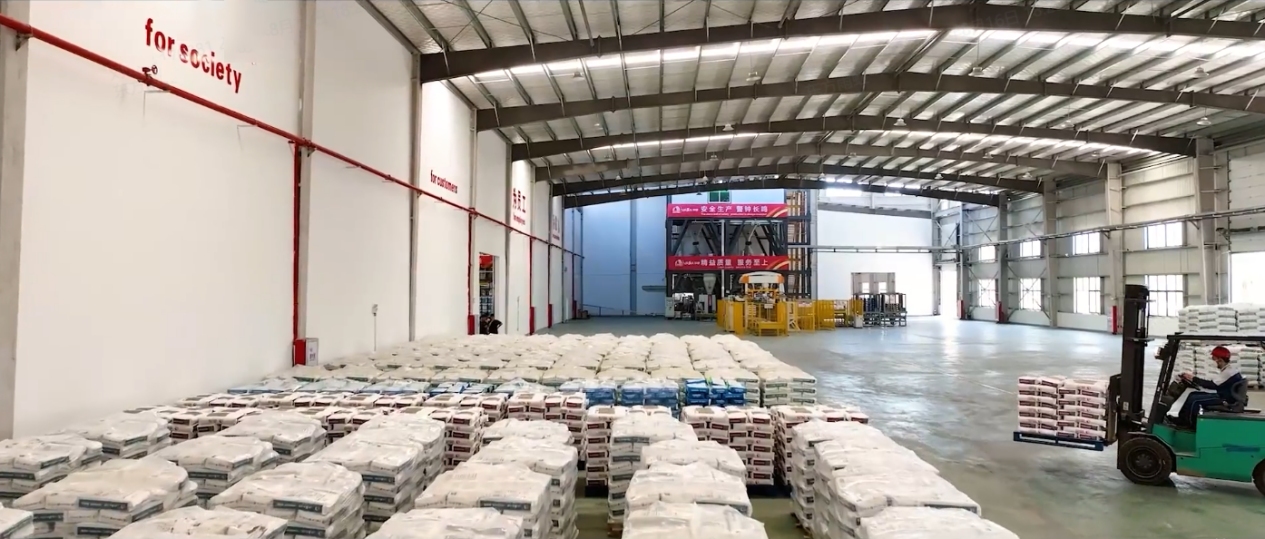
OYH VASA Series tile adhesive adopts self-developed core additives, dried sand and other raw materials, delivering consistently stable quality. With an annual production and sales volume of 3.9 million tons (approximately 160 million bags) in 2025, it is a reliable and trustworthy choice.
Product Features:
– Excellent water retention and bonding strength, ensuring superior workability and mechanical properties.
– User-friendly for application; different models are available to match various types of tiles.
– Compliant with ISO 13007 standards, featuring strong global compatibility.
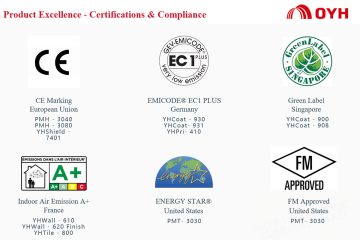
– Eco-friendly and green, certified with GEV EC1plus environmental certification.
Conclusion
Choosing the right tile adhesive is essential for long-term tiling stability. The C0–C2TES1 system offers a standards-aligned ladder: C0 for basic temporary jobs, C1/C1T for small tiles up to 600 mm, C2/C2T/C2S1 for medium and large tiles up to 1500 mm, and C2TES1 for ultra-large slabs and complex conditions. Follow the “standard first, specification second, function last” logic — match strength to tile size, then add T (anti-slip), S1 (flexibility) or E (extended open time) as needed. OYH VASA Series provides ISO 13007-compliant, GEV EC1plus-certified adhesives for every specification.
Ready to find the perfect tile adhesive for your project? Contact us for free samples, comprehensive product technical datasheets, and personalized project guidance from our experts.
For new construction projects, see our guide on (Swimming Pool Waterproofing: Choosing the Right System for Long-Term Water Tightness →. )

Scan for our tile adhesive installation instruction video!
0 Comments