The best way to clean tile grout is to match the cleaning method with the level of dirt—while addressing the underlying cause of staining. Many people focus only on scrubbing, but long-term results depend just as much on materials and moisture control as on cleaning itself.
Grout becomes dirty because it absorbs water, grease, and dust. Without proper maintenance or protection, even newly cleaned grout can quickly lose its appearance again.
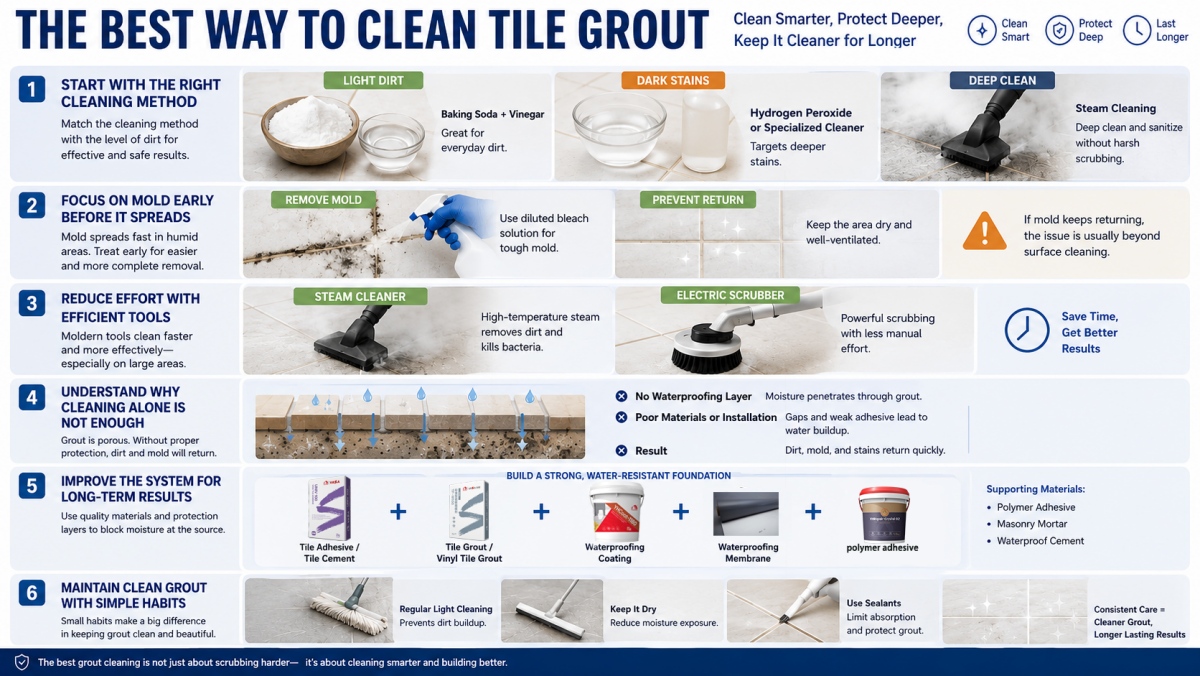
Start with the Right Cleaning Method for the Situation
Not all grout stains require the same approach. For everyday dirt, simple solutions are often enough, while deeper stains need more targeted treatment.
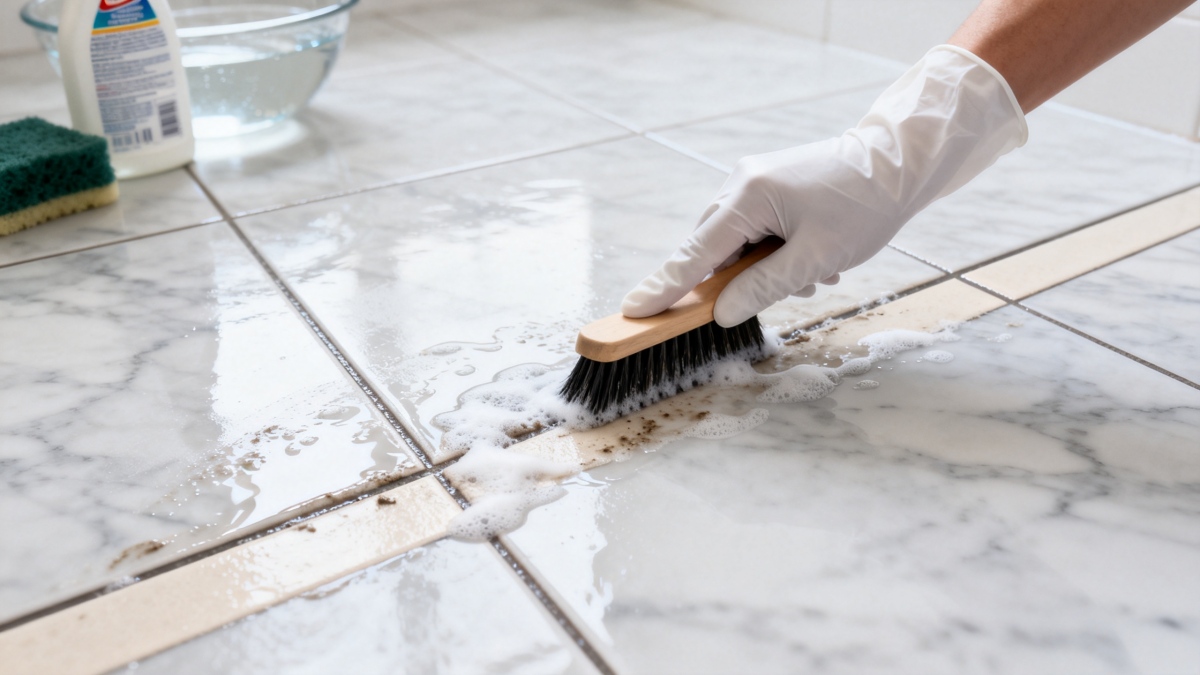
A baking soda and vinegar combination works well for light buildup. The reaction helps loosen dirt so it can be removed with minimal scrubbing. For darker stains, hydrogen peroxide mixtures or steam cleaning provide stronger results without excessive abrasion.
Instead of over-cleaning, choosing the right level of treatment improves efficiency and protects the grout surface.
Focus on Mold Early Before It Spreads
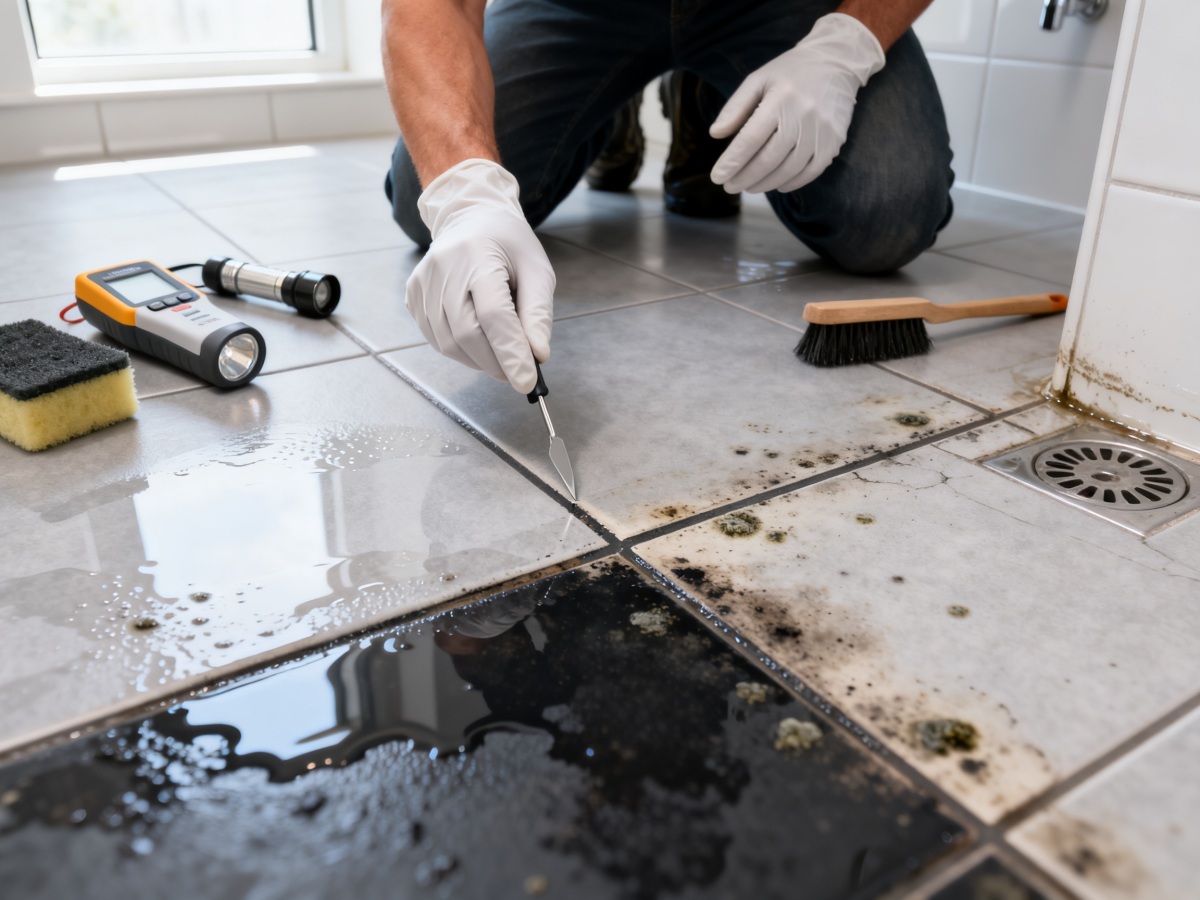
Mold is one of the most common grout problems, especially in humid environments. Once it spreads into porous grout, it becomes harder to remove completely.
A diluted bleach solution is typically the fastest way to eliminate mold, while natural acids like vinegar can be used for lighter cases. The key is early treatment—waiting too long often leads to deeper penetration and repeated cleaning.
If mold keeps returning, the issue is usually beyond surface cleaning.
Reduce Effort by Using More Efficient Tools
Cleaning grout manually can be time-consuming, especially across large tiled areas.
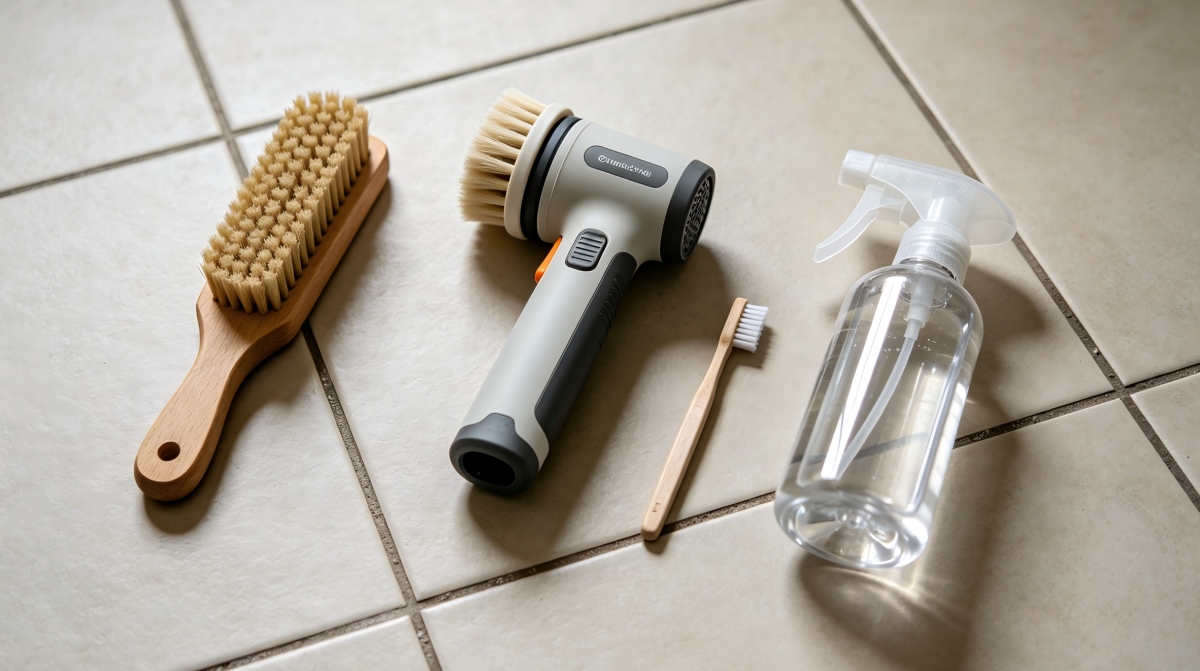
Modern tools such as steam cleaners and electric scrubbers improve efficiency by reducing the need for repeated scrubbing. High-temperature steam not only removes dirt but also helps eliminate bacteria in the process.
Using better tools doesn’t just save time—it also leads to more consistent results.
Understand Why Cleaning Alone Is Not Enough
A common mistake is assuming that better cleaning will solve recurring grout problems. In reality, repeated staining often points to deeper issues.
Because grout is porous, it allows moisture to pass through. If there is no proper waterproofing layer or if unsuitable tile adhesive or tile cement was used, water can accumulate beneath the surface. This creates an environment where dirt and mold return quickly, regardless of how well the surface is cleaned.
Improve the System to Achieve Long-Term Results
Using high-quality tile adhesive or tile cement ensures proper bonding and reduces gaps where moisture can enter. Choosing durable tile grout or vinyl tile grout improves resistance to staining.
More importantly, adding protection layers such as waterproofing coating, waterproofing membrane, bituminous membrane, or TPO membrane helps block moisture at the source. Supporting materials like polymer adhesive, masonry mortar, and waterproof cement further enhance overall performance.
This approach shifts the focus from repeated cleaning to long-term durability.
Maintain Clean Grout with Simple Habits
Regular light cleaning prevents buildup from becoming stubborn. Keeping tiled areas dry reduces moisture exposure, while sealants help limit absorption into the grout.
With the right combination of daily care and proper materials, grout stays cleaner for longer without requiring constant deep cleaning.


0 Comments