Pool tiles are constantly exposed to water, chemicals, and temperature changes. Because of this, the grout used between tiles must be strong, waterproof, and resistant to chemical erosion.
In most swimming pool applications, epoxy grout and high-performance cementitious grout are the two main options. However, they perform very differently in long-term underwater conditions.
Choosing the right type of grout is essential for preventing leaks, stains, and tile movement over time.
What Is the Best Grout for Pool Tiles?
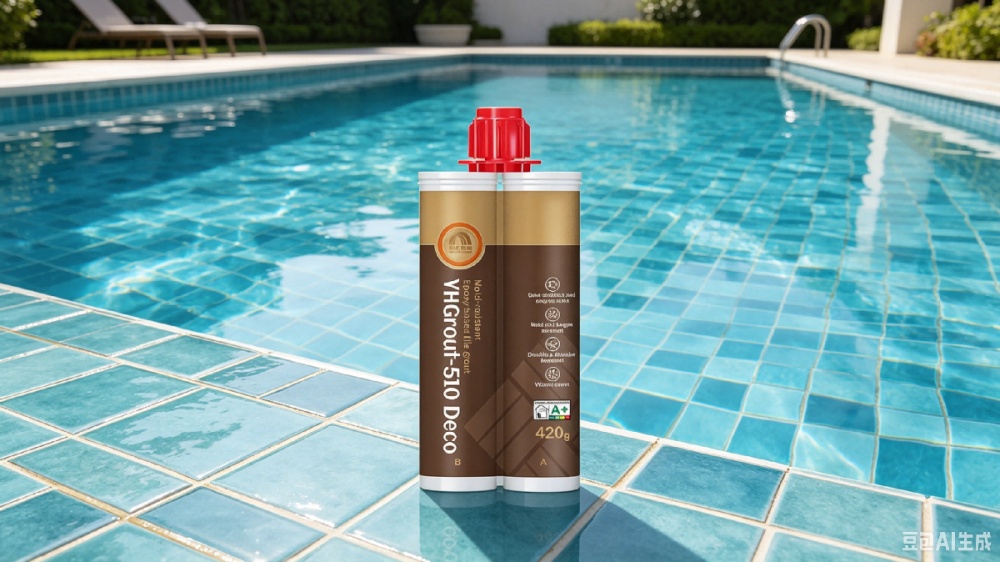
For most swimming pools, epoxy grout is considered the best option.
Unlike traditional cement-based grout, epoxy grout does not absorb water. It forms a dense, non-porous structure that resists pool chemicals, chlorine, and algae growth.
This makes it especially suitable for:
· Swimming pools
· Spa areas
· Water features with constant immersion
Cement-based grout can still be used in some cases, but it generally requires sealing and more maintenance, especially in long-term underwater environments.
In practice, epoxy grout is preferred when durability and low maintenance are the priority
Why Epoxy Grout Is Commonly Used in Pools
Epoxy grout is widely used in pool tile installations because it performs well under continuous water exposure.
It does not soften, shrink, or absorb moisture like standard grout. This helps reduce cracking and prevents water from penetrating behind the tiles.
It is also highly resistant to stains and pool chemicals, which helps maintain a clean appearance over time.
Although epoxy grout is more difficult to apply, the long-term performance makes it a preferred choice for professional pool installations.
How to Choose the Right Pool Tile Grout
Selecting grout for pool tiles depends on several practical factors rather than appearance alone.
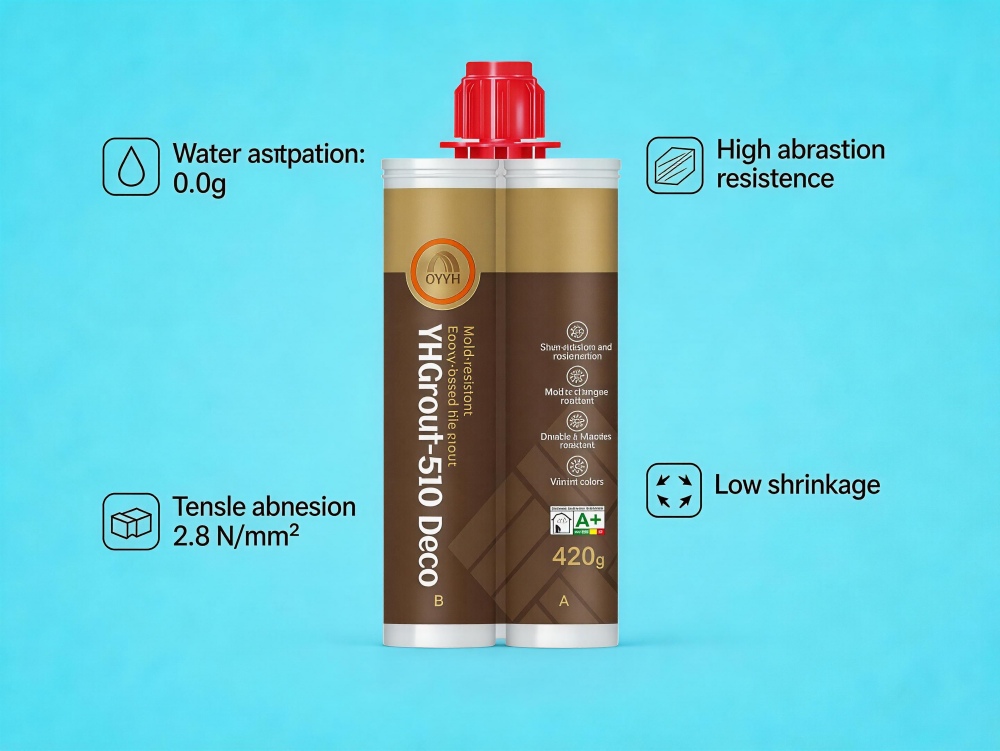
The most important factor is water exposure. Fully submerged areas require epoxy-based systems, while partially exposed zones may allow modified cementitious grout.
Tile joint width also matters. Narrow joints require finer grout, while wider joints need a stronger filling material to ensure stability.
Color selection is mainly aesthetic but also affects maintenance. Light colors create a clean visual effect but may show stains more easily. Darker tones are more practical for high-use pools as they hide dirt better.
For contractors and project buyers, consistent material quality and application support are also important. Suppliers like OYH provide grout solutions designed for swimming pool environments with stable performance and technical guidance.
Common Problems with Pool Tile Grout
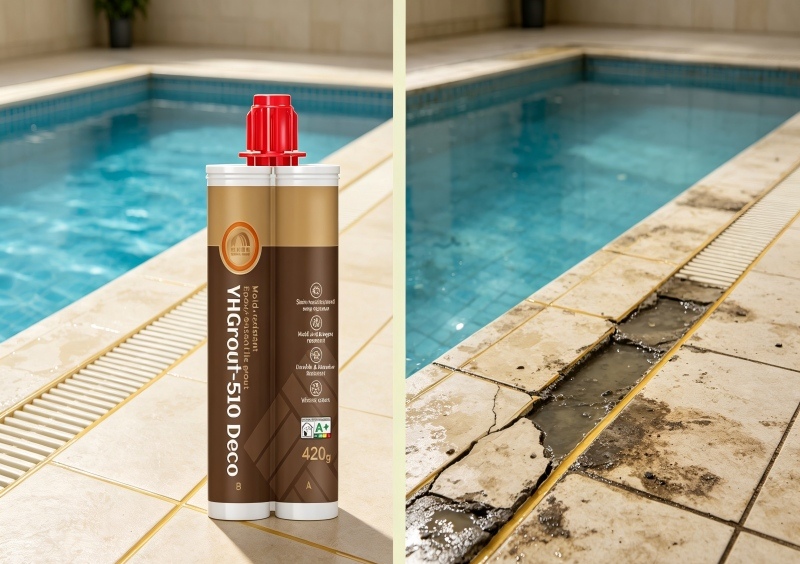
Most grout issues in pools are caused by incorrect material selection or improper installation.
Cracking can occur if the grout is mixed incorrectly or exposed to movement before curing is complete. Water leakage often results from using non-waterproof grout in submerged areas.
Another common issue is mold or staining, especially when grout is not properly sealed or maintained.
Temperature changes and chemical exposure can also affect long-term durability if the wrong type of grout is used.
Most of these problems can be avoided by choosing the correct system and following proper installation procedures.
How to Apply Grout on Pool Tiles Correctly
Proper installation is essential for long-term performance.
Before grouting, the tile surface should be clean and dry to ensure proper bonding. Any dust or moisture can weaken adhesion.
The grout should be mixed according to manufacturer instructions to achieve the correct consistency. It is then applied diagonally using a rubber float to fully fill tile joints and prevent voids.
Excess grout should be removed carefully before it fully hardens, followed by proper curing time before exposing the surface to water.
For professional installations, using a stable product system such as OYH epoxy grout can help ensure consistent results.
Conclusion
The type of grout used in pool tile installation directly affects durability, waterproofing performance, and maintenance requirements.
Epoxy grout is generally the most reliable option for swimming pools due to its water resistance and chemical stability, while cement-based grout may still be used in less demanding areas.
A correct material choice, combined with proper installation, ensures long-lasting and low-maintenance pool performance.

0 Comments