In construction and waterproofing projects, two types of materials are often confused: sealants and adhesives.
While both are essential in building systems, they serve completely different purposes. Choosing the wrong one can lead to:
• leakage issues
• structural failure
• costly repairs
In this article, we will clearly explain the difference between sealants and adhesives, and help you select the right solution for your project — including high-performance products like YHSil-100 neutral silicone sealant and YHbond-125 high strength structural adhesive.

What Is a Sealant?
A sealant is a flexible material used to fill joints and gaps to prevent the passage of:
• water
• air
• dust
• chemicals
Sealants are designed to accommodate movement caused by:
• thermal expansion
• structural movement
• vibration
Key Characteristics of Sealants
• high elasticity
• excellent weather resistance
• waterproof and airtight
• movement accommodation
👉 Sealants are not primarily used for bonding strength, but for sealing performance.
What Is an Adhesive?
An adhesive is used to bond two materials together, creating structural or semi-structural strength.
Adhesives are designed to:
• transfer loads
• hold materials in place
• provide strong bonding
Key Characteristics of Adhesives
• high bonding strength
• load-bearing capability
• durable structural connection
• less flexible than sealants
👉 Adhesives focus on strength, not flexibility.
Sealant vs Adhesive: Key Differences
| Property | Sealant | Adhesive |
| Main Function | Sealing gaps | Bonding materials |
| Flexibility | High | Medium / Low |
| Strength | Low | High |
| Movement Capability | Excellent | Limited |
| Typical Use | Joints, gaps | Structural bonding |
Why This Difference Matters in Waterproofing
In waterproofing systems, both materials are critical:
• Sealants ensure joints remain watertight
• Adhesives ensure membranes and components stay bonded
👉 Using only one type is not enough for a reliable system.
Recommended Solution: Use the Right Product for the Right Job
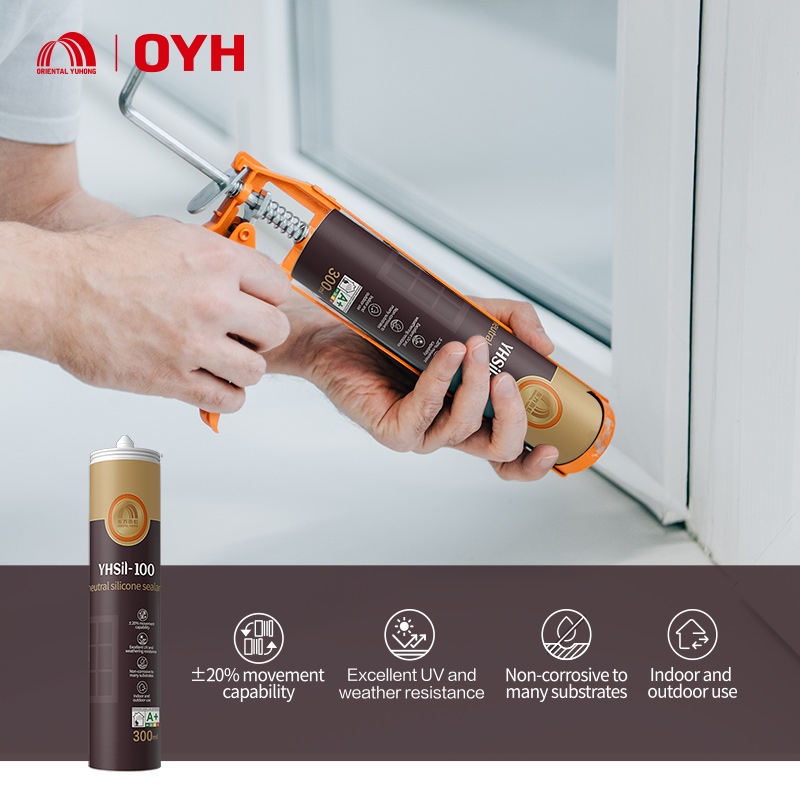
🔹 For Sealing: YHSil-100 Neutral Silicone Sealant
YHSil-100 is a high-performance one-component, neutral curing and easy-to-apply sealing material.
Key Benefits:
✔ ±20% movement capability
✔ Excellent UV and weather resistance
✔ Non-corrosive to most substrates
✔ Suitable for both indoor and outdoor applications
Typical Applications:
• Ideal for weathertight joints between substrates such as glass (excluding mirrors), metal (excluding copper), aluminum, and concrete.
• Suitable for non-structural bonding and sealing of joints of awnings, roofs, drainage ditches, doors and windows, billboards, elevators, and small curtain walls of glass, stone, and aluminum.
👉 Ideal for durable, weather-resistant sealing across diverse substrates.
For Bonding: YHBond-125 High Strength Structural Adhesive
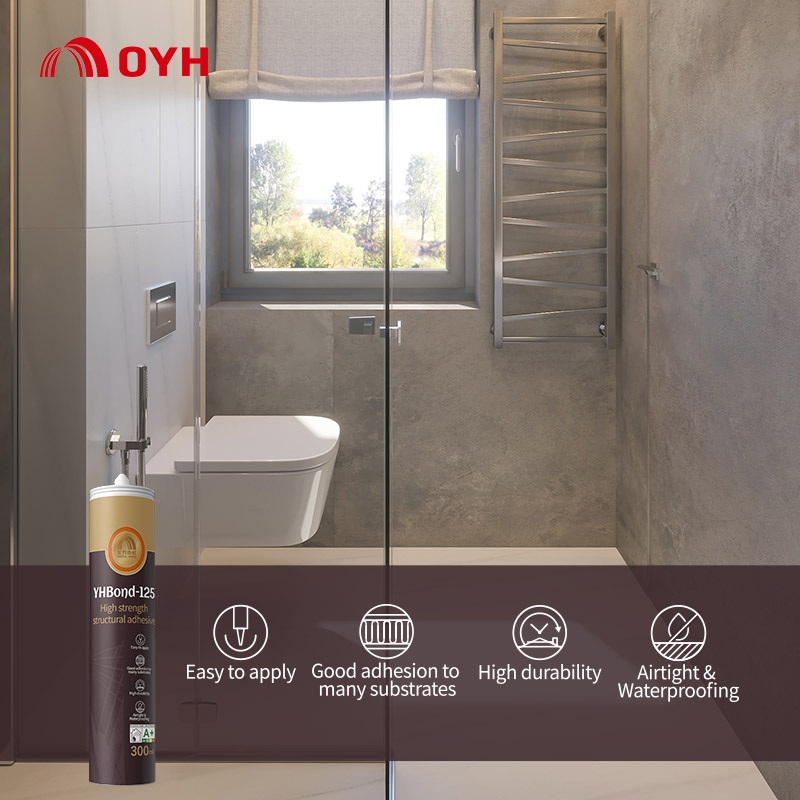
YHBond-125 is a one-component 100% neutral curing silicone sealant. Featuring high strength, high elongation, and excellent bonding performance, it can firmly adhere to most building materials without prime coating.
Key Benefits:
✔Single component and simple application
✔Excellent bonding performance for most substrates
✔Outstanding weather resistance and durability
✔Sealing and waterproofing
Typical Applications:
• Weather-sealing and structural bonding of diverse materials including glass, metal, wood, and concrete
• Curtain wall systems of glass, stone, and aluminum, skylights, and metal structures
👉 Ideal where strength and durability are required

How to Choose: Practical Guidelines
Choose a Sealant (YHSil-100) when:
• you need to seal joints or gaps
• movement is expected
• weather resistance is critical
Choose an Adhesive (YHBond-125) when:
• you need strong bonding
• materials must stay fixed
• load transfer is required
Common Mistakes to Avoid
❌ Using adhesive instead of sealant for joints
→ leads to cracking and leakage
❌ Using sealant for structural bonding
→ leads to failure under load
👉 Always match the product to the function.


0 Comments