Tile grout and tile adhesive are both essential materials in tiling projects, but they serve completely different functions. Understanding their differences is key to achieving proper installation, long-term durability, and a professional finish.
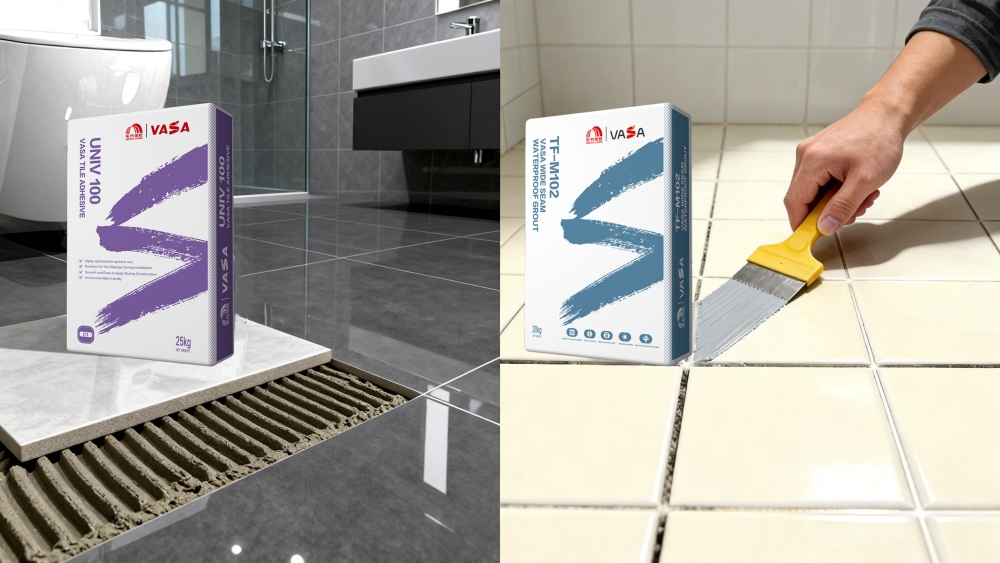
What Is Tile Adhesive?
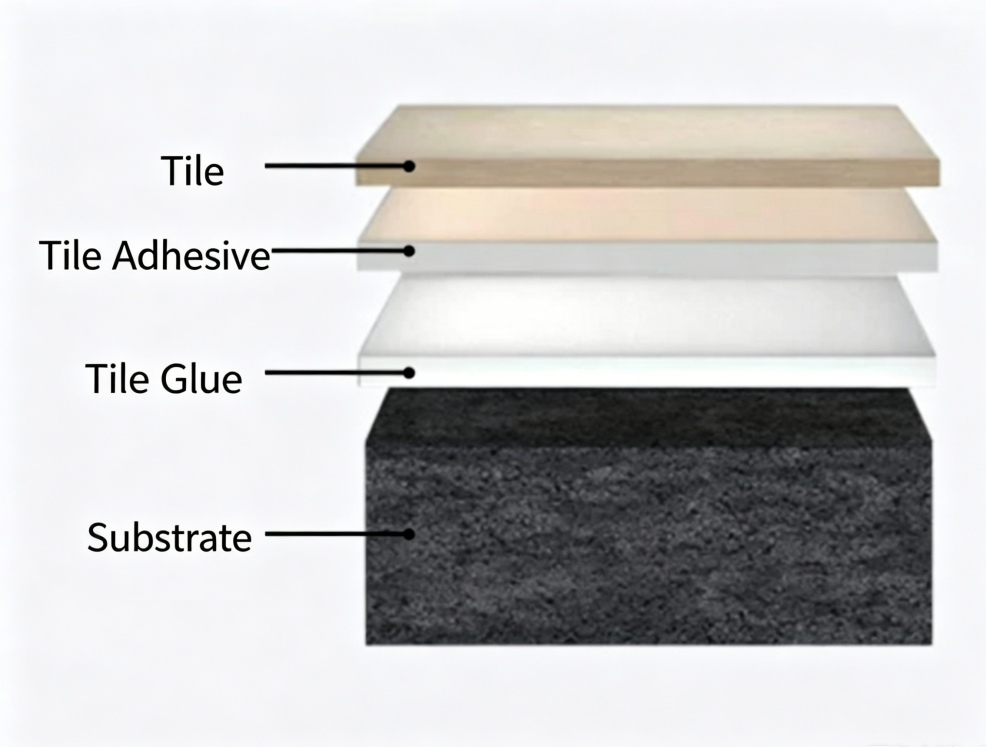
Tile adhesive is the material used to bond tiles to a surface such as concrete, cement board, or drywall. It acts as the foundation of the tile installation, ensuring that tiles stay firmly in place.
Different types of adhesives are designed for different applications. For example, standard adhesives are suitable for ceramic tiles, while natural stone, glass, or large-format tiles often require high-strength or flexible adhesives. In wet areas such as bathrooms, kitchens, or swimming pools, waterproof or water-resistant adhesives are essential to prevent moisture-related issues.
What Is Tile Grout?
Tile grout is applied after the tiles are fixed in place. Its main function is to fill the joints between tiles, locking them together and preventing water, dirt, and debris from entering the gaps.
Grout comes in several types, including sanded and unsanded. Sanded grout is typically used for wider joints, while unsanded grout is ideal for narrow gaps. In addition to functionality, grout also plays an important role in the final appearance of the tiled surface, as color selection can enhance or contrast the tile design.
Key Differences Between Tile Grout and Tile Adhesive
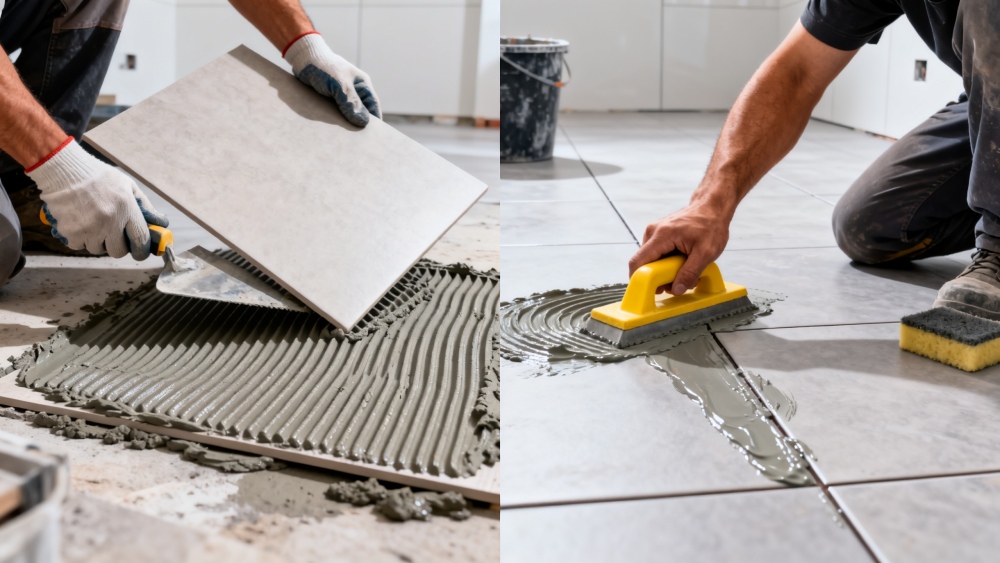
The main differences between tile grout and tile adhesive can be summarized as follows:
· Function: Adhesive bonds tiles to the substrate, while grout fills the joints between tiles
· Application stage: Adhesive is used during tile installation; grout is applied after tiles are set
· Material properties: Adhesive focuses on bonding strength, while grout focuses on sealing and finishing
· Performance role: Adhesive ensures structural stability, while grout provides protection and aesthetics
Understanding these differences helps avoid common installation mistakes, such as using grout as adhesive or selecting the wrong material for specific conditions.
Common Problems When Using the Wrong Materials
Using incorrect or low-quality materials can lead to several issues. Poor adhesive selection may result in tiles loosening or detaching over time, especially in high-moisture or high-traffic areas. On the other hand, low-quality grout may crack, discolor, or allow water penetration, which can lead to mold growth and long-term damage.
Proper waterproofing systems, along with high-performance adhesive and grout, are essential for ensuring durability, particularly in wet environments.
Choosing the Right Materials for Your Project
Although grout and adhesive serve different purposes, both must be selected carefully based on tile type and application area. Heavy tiles require stronger adhesives, while areas exposed to moisture demand water-resistant solutions. Similarly, choosing high-quality grout improves resistance to stains, cracking, and water infiltration.
For contractors and distributors, sourcing materials in bulk from reliable suppliers can ensure consistent quality and reduce project costs. OYH offer a wide range of tile adhesives and grouts designed for different construction needs, making them suitable for large-scale and professional applications.
0 Comments